If you could choose to live without a physical body, would you?

When I ask people this question, whether my clients or my friends, the answer is nearly always yes.

To clarify, this post is not specifically about:

  • Spirituality, the spirit or the soul (although it could be, depending on your beliefs); 
  • Cryonics, or the fantasy of having your brain frozen and stored until technology has developed to the point where you can be reanimated (although it could be, depending on your beliefs); 
  • Physical disability (although it could be, depending on your situation and experience).

I am speaking about the sense of freedom you could have if your physical body wasn’t confining you emotionally, mentally, relationally, spiritually and politically.

Anyone may feel this – no matter how outwardly successful they may be, or how comfortably and conventionally their body functions.

If you are, for example, read as a woman or femme or female or feminine, (no matter what gender you were assigned at birth), you will know that you cannot move through the world without your physical body being scrutinised.

You will be informed constantly that your body (and therefore you) is either too much or not enough, sometimes simultaneously, and the goalposts move faster than you can adapt to their constant repositioning. You are relentlessly beholden to the opinions and assumptions of others. (Or perhaps you are read as not feminine enough. )

You are constantly aware of being on show, and of the consequent risk of mockery or violence, so your energy is drained and your nervous system taxed by being on constant alert.

It’s hard to challenge patriarchy (or any other embedded societal structure) when it has your face gripped in its hands and is unblinkingly staring you out.

Imagine this not happening to you.

Imagine no more comments about your weight or your face or your presumed sexual capacity. Imagine that you could go where you wanted without fear.

Actually, people of all genders have replied to this question with a yes.

And this is not just about gender. Much of society believes that others owe them their bodies – whether in terms of race, class, or disability. What if we, as individuals, could choose not to have these bodies? We could be free of so many demands. 

What if we could exist without a body, and in our chosen invisible shapes and dimensions?

What if you could shapeshift your bodyless self, and be infinitesimally small in one moment, all-encompassingly huge in another.

And what if it was up to you whether you experience sensation at all? If you struggle with the demands of sensory processing, what would it be like to be able to choose what, and how much, you experienced? What if we could choose where our imagined external boundary is – if we even wished for one at all?

As a late diagnosed neurodivergent person, I now have greater understanding of my own relationship with touch and movement, and why it was never as straightforward as it seemed to be for others. Interoception and proprioception are hard work at times – what if we didn’t have to navigate them?

In contrast to much social media output, to feel less can be a luxury.

Imagine you could feel just enough to get by and more easily navigate a world that constantly threatens to engulf us with its own needs and desires?

I spent a number of years in somatic and sexual experiential spaces where (consensual) touch was central, and participants were encouraged to be fully present. When we experimented with up-regulating and down-regulating breaths, it occurred to me that some people are already feeling more than is comfortable for them, and not all of the processes we entered into were helpful. Some of us, because of our previous experiences or simply because of who we are, already feel too present. The only way to tolerate this is through self-removal, or dissociation.

Remove the physical body and there could be so much more, so much more to do and be. And what could sex be?

I’m aware of the multitude of beliefs and philosophies that hang off this thought experiment, and how we could go down any number of roads when talking about it. (And I’m aware that my utopia becomes a little fuzzy, because who would choose to lose their corporeality and who would keep it? And what power structures might ensue?)

I’m aware that technology can partially take us there. As can meditation. As can drugs. Partially.

So let’s come back to the beginning. If you could live without a physical body, would you?


Looking back on 10 years as a GSRD therapist

Today is the 10th anniversary of my first private practice client coming through my door. I’m going to mark the day here.

Becoming a therapist was a fiery process for me. Some challenging things happened during my core training that impacted me a lot as I moved into life as a therapist. Like many traumatic experiences, while I wish these things had not happened, they gave me greater understanding of the system therapists operate in. This politicisation was very useful to me as I developed as a practitioner. Throughout that period I was experiencing similarly intense shifts elsewhere in my life.

A lot has happened in 10 years, to me and to the industry, and in the lives of my clients and colleagues. This is a blog so I’ll keep it concise! I cannot cover everything here. You can assume I could write a whole standalone piece on everything I mention below.

THE GOOD

Retraining as a therapist in midlife

If this is you, your energy levels and capacities are changing and your life choices are shifting. (See also, of course, menopause.) Your experience when training, and coming into the work, will depend on your existing life experience and resources. At midlife you have been around the block, and while your life experiences will not automatically make you a good therapist, they will be useful. 

If you are already well-resourced financially your training experience will be very different to those who aren’t. I don’t recommend juggling the final years of your training on an unpredictable self-employed income with no savings and no credit! But I did it and I’m grateful to past me for hanging in there. 

The evolution of Gender, Sex and Relationship Diversity (GSRD) therapy

I was extremely lucky, in 2013, to find the Pink Therapy community (practitioner directory here). I cannot overstate the importance of this to me as a therapist. 

Bringing LGBTQIA+ people together with people who are consensually non-monogamous and/or kinky, and/or who do sex work, makes for a larger, louder group and a wider range of experience. Particularly as many of those identities and lifestyles cross over.

When I started, GSRD was GSD (without the R), and then someone suggested that relationship diversity ought to come in, to reflect all forms of CNM (Consensual Non-Monogamy). ‘Sexual’ later became ‘Sex’, to include the experience of Intersex people. It’s been amazing to see more and younger therapists come in, and to see more and more GSRD trainings being offered. 

In terms of sex and gender specifically it’s been good to see a greater understanding and acceptance of fluidity (as opposed to essentialism or ‘born this way’) as time has passed, and an expansion of the idea of ‘queer’. 

Sexology

In parallel with GSRD, sexology as a discipline has grown in stature and become normalised. The UK has the Contemporary Institute of Clinical Sexology. There has been an explosion of sex educators on social media. When I was doing sex media in the 2000s there were sniggers – ‘LOL what do you really want to be doing?’ – as if no one could ever take sex seriously as a topic, despite its universality. I am very happy to see that attitudes have shifted a lot. People are doing research around porn, and sharing information (eg Facts of Porn), and favouring ideas of compulsive sexual behaviour over outdated concepts of sex addiction. 

Sex work

Sex work is being discussed increasingly as an issue of labour rights and of decriminalisation rather than something that brings the world in general (and the therapy industry in particular) into ‘disrepute’.

Consent

Consent has been talked about more and more and I am grateful to those at the forefront of this. I have been on a huge journey around consent, in both my personal and working lives. Many people now offer training and information around what consent can look like, and what to avoid (eg The Art of Consent‘s downloadable guides; the Consent Collective; and the Wheel of Consent).

It takes a while to absorb the fact that just because you want something doesn’t mean the other person wants it too. We do well to ask ourselves ‘Who is this for?’ before any interaction, whether instigated by you or the other person. My greater understanding has come out of my time in kink and somatic sexology. But my heart breaks for much younger me – and thousands, millions, of others.

When touch is involved, consent is essential. But consent is essential whether touch is involved or not. It’s caused me to think more and more about what consent means in the therapy room.

Trauma

Our understanding has increased and this is important. It is about the individual as much as about what happened to them. Over the years I have expanded my understanding of trauma and CPTSD – I did not realise for a long time that I was experiencing it from a young age. For sure, I knew enough about it and that others experienced it. But me? No, surely not. Many people experience chronic relational trauma from childhood and its impact is incalculable.

The rise of Counsellor Power

Counsellors have been talking back to the industry for a while now, and this movement has grown and grown. (See Counsellors Together UK) There has been increasing fightback around exploitation and being expected to work for free, and against recent changes to the industry that resemble Brexit both in their unfitness for purpose, poor evidence base, and the non-consensual way they are being implemented (see below).

Thankfully therapists nowadays have a union, the Psychotherapy and Counselling Union (PCU), which also supports trainees. Founded in 2016, the PCU did not exist when I really needed them. I wonder how different my experience would have been if I had had them by my side.

THE BAD

OK, so there are a few qualifiers to what I’ve said above.

Despite GSRD now being officially a therapeutic modality, GSRD therapists are still a relatively small community. Overall, the therapy industry as a whole remains highly conservative. Also very white and middle class. I get a strong sense of a group of people holding on very tightly to something and refusing to let go.

In the case of sexology we are still not talking deeply enough about what sex means and who gets to say what it is and who has the power to create this narrative.

Also, there are still therapists who want their sex worker clients to stop doing sex work before the therapy can start. Sex workers still have to think very hard before disclosing to their therapists.

The trauma therapy industry has proliferated and trauma therapists who don’t understand trauma has become a disturbing theme. There are still, apparently, therapists who tell clients that the work cannot start until the client stops dissociating. One high profile trauma training site used to put the names of people who had purchased their products along with their home cities literally on the front of their website. A while back I pulled out of a trauma training just before it started because one of the admins (a therapist) shared all the participants’ home addresses and phone numbers with each other, without warning or obtaining consent. 

And people are still being labelled ‘borderline’ when they are actually traumatised or neurodivergent, and this label is still being dumped onto young women, queer and trans people, causing further stigma. I’ve actually seen high profile therapists on Twitter use ‘borderline’ as a way to put someone down during an argument. (Therapists on the internet is a rich and concerning topic which I will spare you today.)

The attack on Trans rights

Trans rights have been increasingly under attack across the UK over the last 10 years and more. This ongoing attack has found its way into the therapy industry, partly in the form of conversion therapy. The fact that this is happening represents a failure of human rights awareness and of feminism, a lack of understanding of patriarchy, and a lack of respect for humanity. To see this manifesting among therapists is disturbing and highly distressing.

Therapeutic harms

Harm in therapy is being discussed more and more (and I myself have absolutely been harmed in therapy) as well as harm in training (ditto). It’s important to remember that one mirrors the other. I have heard terrible stories of trans trainees being bullied, debated with by facilitators, and expected to educate other students; endless racism and classism; lack of regard for, and understanding of, systemic and intersectional issues; and breaches of confidentiality.

If it’s happening in training it’s happening in the therapy room.

Racism and white supremacy

Where racism and white supremacy are concerned, not enough change is happening. I don’t see enough will to make this profession accessible to those who are minority or global majority identified. There are a number of practitioners offering books and courses that provide opportunities for self (and organisational) reflection. For example: Race Reflections (Guilaine Kinouani); Me & White Supremacy (Layla F Saad); Working Within Diversity (Myira Khan); Dwight Turner (Training and books); Somatic Abolitionism (Resmaa Menakem). There are many others paving the way for improved education – their work needs to be built into counselling from the start.

Large scale shifts in the industry, in the form of the SCopEd project, do not seem to be addressing any of this at all (basic outline here ; many critiques here) and in fact seem to have the intent of entrenching old ideas further. Any idea that context and identity matter, and affect a person’s experience, seems still difficult to grasp. It represents a systemic failing, which is interesting because Systemic Therapy as a modality seems to have be ignored throughout.

There is still too much medical model, top down, old school thinking lurking behind a humanistic mask. Many would also say that western notions of therapy are harmful and we need less individualistic models. For more on this check out the Radical Therapists Network, founded by Sage Stephanou; and Dr Jennifer Mullan whose book Decolonising Therapy is coming out on 7th November.

On a meta level the psychotherapy and counselling world industry exists in a place of non-consent and we need to be naming it.

BEING A THERAPIST IN A PANDEMIC

This gets its own special section. 

As my supervisor put it, therapists have been helping our clients process their responses to Covid, while processing our own responses to it – in real time. 

And we have all been simultaneously processing rising fascism and climate catastrophe.

A huge amount has happened in my life since spring 2020, in the form of positive change, huge personal revelation, and profound loss. And a huge amount has happened in the lives of my clients.

In the therapy world, the endemic technophobia (yes, another failure of education) showed itself through the mass panic when taking our practices online became a reality. I was grateful that I had been seeing some of my clients online for a number of years before lockdown started. (I now work entirely online.)

The pandemic also revealed terrible ableism, which persists. There seems to have been a collective denial, and a deliberate ‘forgetting’, of the ongoing experiences of those with Long Covid, even among ‘nice queer lefty’ circles. This has happened across society. Collectively, society had a chance to change the way we relate to each other (eg wearing masks to protect everyone, for a start) but, for multiple reasons, this hasn’t happened.

Closer to home, (the therapy world mirrors outside society, as you might expect), anecdotally some core trainings seem to have avoided dealing with Covid and protecting all their students over this period. Anyone with disabilities or health vulnerabilities (or the potential for them) may be forced into shadow. Speak out and you risk being isolated further. I would love to hear about organisations (and I’m sure they do exist) that are acknowledging the realities of differing health and disability needs of their students.

NEURODIVERGENCE

This also gets its own section. This is the biggest shift for me. For many years my thoughts on mental health and psychotherapy, as well as my experiences in therapy, have coalesced in a way that I could not articulate. As time has passed, I’ve come to understand how some of the conventional therapy narrative may be actually harmful to neurodivergent people. (I am including trauma and chronic anxiety/depression on top of Autism, ADHD, OCD etc.) It can feel like gaslighting and does not take into account how ND people experience the world. It actually starts to feel like a kind of conversion therapy.

In the last few years, as I have explored and confirmed my own neurodivergence, I have started to understand these concerns. During these explorations I’ve been consistently amazed by the sheer numbers of neurodivergent people working to shift attitudes and make life better for what is turning out to be quite a lot of us.

THE EXCELLENT

With everything I’ve named above, what keeps me in this profession?

Being part of something bigger. Receiving knowledge gained from others’ experiences, and offering it too where I can. I hope I have contributed to this profession in some way. (You can find some of my work here.) Working in private practice can be isolating, so having a community around you is invaluable and important for wellbeing.

My supervisor(s). I have been with my current supervisor for eight years and I’m endlessly grateful for her wisdom and experience. My previous supervisors also brought good learning into my life.

My colleagues. I’ve met some amazing colleagues who have become close friends. The GSRD community as a whole has been an absolute fount of wisdom. There are people out there doing important work who I am proud to know and learn from.

My clients. I could not have got here without the courage and the trust of all the people who have come to work with me over the years. It’s a great feeling having helped someone find a clearer path through life. 

What a journey it’s been. And continues to be.


Menopause and Therapy

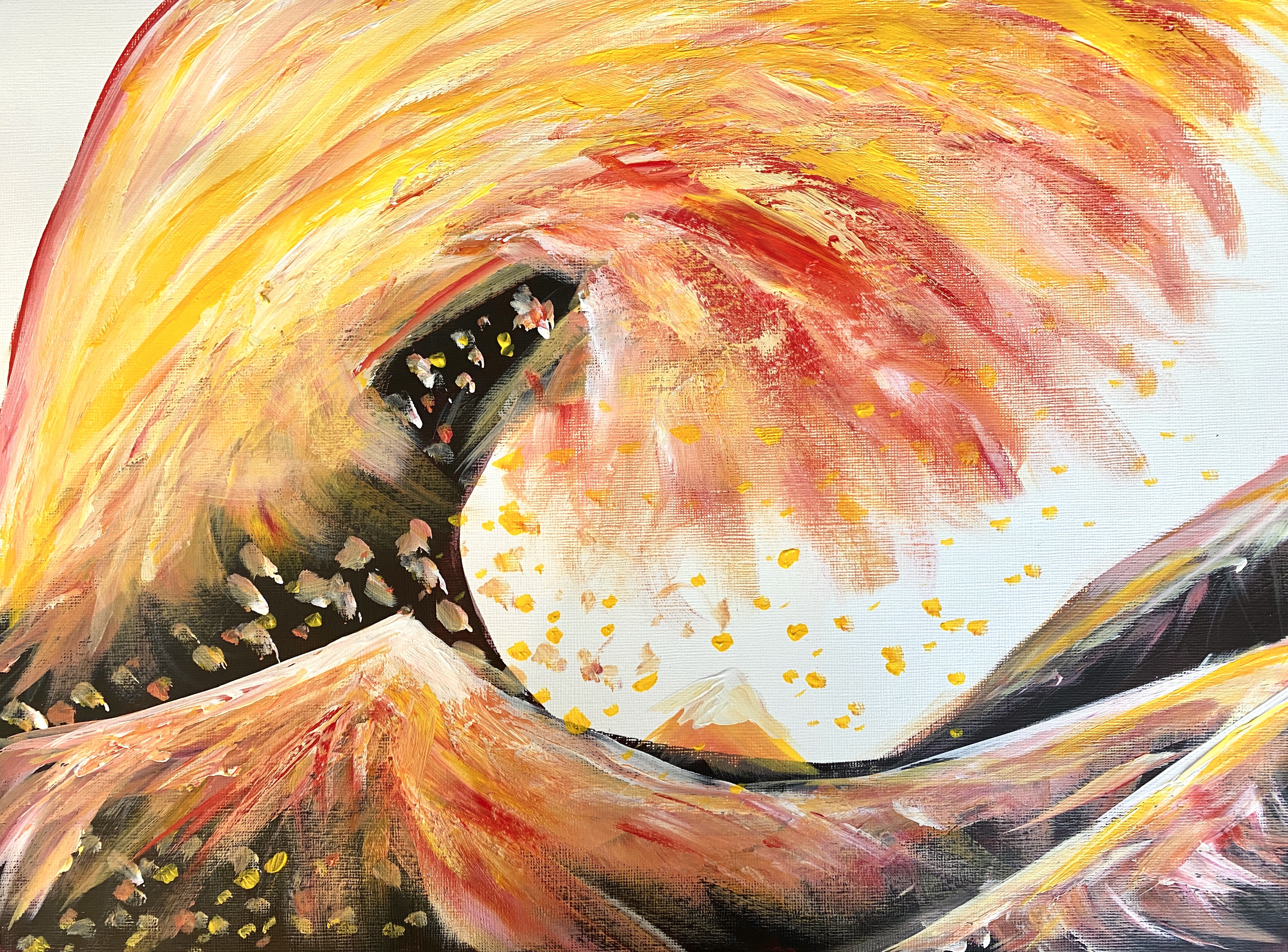
Expressionist painting from Hokusai's Great Wave off Kanagawa in reds, yellows and black.

World Menopause Day 2021

Truthfully I don’t know how – or even whether – to celebrate World Menopause Day. What I do know is that if you are reading this, you may be seeking some clarity about your situation, whether for you or someone close to you.

Things are gradually changing for the better. Awareness-raising is increasing and more people are shouting about menopause, particularly those who are generally excluded from the mainstream narrative, for example: people who are LGBTQIA+, Black, neurodivergent, or who experience surgical or premature menopause. 

‘Why did nobody tell me?’ 

But there is so much more to do and, while society learns to adapt to the needs of this enormous population group, a lot of people are still floundering. Particularly those without the resources to have their voices heard via the media. But whoever you are, and whatever resources you have access to, you may still be wondering why no one ever said a word to you about peri/menopause.

Perimenopause is a Thing

I mean, you probably knew that – but if you’re in your 30s you need to be knowing about it now. If you’re in your mid-late 30s to early 40s and are experiencing changes in your mood or body, or exacerbations to existing conditions you may have, this may be peri and you need to know about it. You are not ‘too young’, no matter what anyone tells you. Looking back, mine started at 39 and possibly earlier.

Menopause is a Hormonal Transition

A hormonal transition means change. A change in outlook. A change in desire. A change in what you can tolerate. It may mean a shift in how you view your sexuality and your gender. I’ve spoken about this in a talk called ‘Menopause – Agent of Queerness?’

Menopause is Compounding and Multifactorial 

Whatever is already going on for you, whether connected to your identity or to your life experience, menopause is going to interact with it. If you are already affected by past or present trauma, mental and physical ill health, disability, financial concerns, domestic abuse, lack of resources, minority or minoritised identity, menopause will exacerbate it. (Eventually, it may help things too, but there is a lot to get through first.)

And the way menopause is promoted, and treated, in society mirrors systemic bias, whether ageism, racism, ableism, misogyny, or transphobia.

Menopause doesn’t only happen to Cis Women

Trans men and non-binary people also experience menopause. (I’ve written more here about the non-binary experience of menopause.) Seeing peri/menopause information, resources, discussions, social media posts, etc, addressed only to ‘women’ can actively hinder someone’s attempt to inform themselves and get support. There are negative health outcomes to this. Actually, lots of folks dislike the gendering of everything in healthcare particularly, especially being called ‘ladies’.

Menopause doesn’t only happen to White Women

As above, I could say the same about the whiteness of much menopause information and resources. People of colour’s experiences are barely being heard about or acknowledged. It’s not good enough.

‘I need help – but what kind of help?’

 In some corners of social media there is a certain pressure to be super positive about menopause. If you are seeking cheerleading, there are plenty of practitioners and they are easy to find.

But I’m thinking you came onto a therapist’s website because you need somewhere to talk about what’s going on for you on a number of levels. To name aloud what’s happening to you inside and outside. 

There may be anger, fear and shame. You may not feel able to talk about the things that are going on in your mind and body. Your working life and relationships may be in turmoil. You may be wondering who you ever were and realising that, looking back, it all felt like a costume. Parts of you may be opening up, and other parts may be shutting down.

You may be non-binary or trans or queer and have very few places to explore how menopause intersects with your life. You may be cis and straight but feel totally alienated by the mainstream menopause narrative. 

Whatever you need to bring, I can offer you a place to talk about it.

You can contact me here.


Gender and Sexuality CPD trainings

Need some CPD?  Would you like to to update your skills and knowledge?

In 2017, as part of London Sex and Relationships Therapy, I am offering trainings on Gender and Sexuality in the therapy room, and other related subjects.

In January I will be in Cambridge and Edinburgh, facilitating:

Gender and Sexual Diversity in the Therapy Room

Drawing on the book Sexuality and gender for mental health professionals: A practical guide (Richards & Barker, 2013), this training provides a basic outline of good practice when working with issues of gender and sexuality. Attendees will be encouraged to reflect upon their own ideas and assumptions about gender and sexuality, and those implicit in their therapeutic approaches. We will consider various ways of understanding sexuality and gender, and their implications for therapy across client groups. Specifically we will focus on the issues which can be faced by those who fit into normative genders, sexualities and relationship structures, as well as for those who are positioned outside the norm.

If you would like to attend, please follow the links below for bookings:

Relate Cambridge – Saturday 14th January 2017 (10-4pm)

Information about this training and about Relate

Relationships Scotland – Saturday 28th January 2017 (10-4pm)

Information about this training and about Relationships Scotland

If you would like further training

If you are looking for training on this subject or something related, please contact me and either I or one of my colleagues will come back to you.


Am I kinky? And is this a problem?

screen-shot-2016-11-16-at-10-07-38Due to media stereotyping, unhelpful labelling with words like ‘paraphilia’ and ‘perversion’, and the assumption of mental illness or pathology – if you identify as kinky (or feel you may be) you sometimes wonder if there is something wrong with you.

You may have felt unable to share your feelings with anyone else. And you may also have avoided going to therapy, even for something entirely unrelated to your identity or lifestyle, because you fear either being treated as ‘sick’, or having to spend many hours justifying yourself.

For a start, kinky does not equal bad or weird

For some people, being drawn to BDSM (Bondage and Discipline, Domination and Submission, Sadism and Masochism) dates from their oldest waking thought or memory. Others discover it later in life. We live in a time when what you might call identity essentialism (‘If you weren’t born this way it’s fake’) is being questioned. Identities and orientations can evolve over time:

  • For example, from a young age you might have found yourself wishing to be restrained, or were aroused by certain scenes on television or in books, or took a specific dominant or submissive role during play with others. You may have put these thoughts and feelings away for years.
  • Or perhaps, as you grew up, you never felt right doing what everyone else seemed to be doing sexually, but weren’t sure how to articulate it, and just carried on doing things that didn’t really do much for you. Or stepped away from intimacy altogether. 
  • Or later in life you felt exciting changes coming on and, like Alice down the rabbit hole, you tumbled into a whole new world that you never wanted to come back from.

Secondly, it’s far more common than you think

And, even more importantly, studies (see the links at the end of the article) suggest that the kink identity correlates with a number of positive attributes.

A spectrum rather than a binary

I find it preferable to open up the definition rather than narrow it. Do you find greater release in giving or receiving extreme sensation? Do you experience something deeper when you give yourself over to another person, or take power over them? Do these experiences make you feel more fully you?

There are an almost infinite number of ways to express your kink

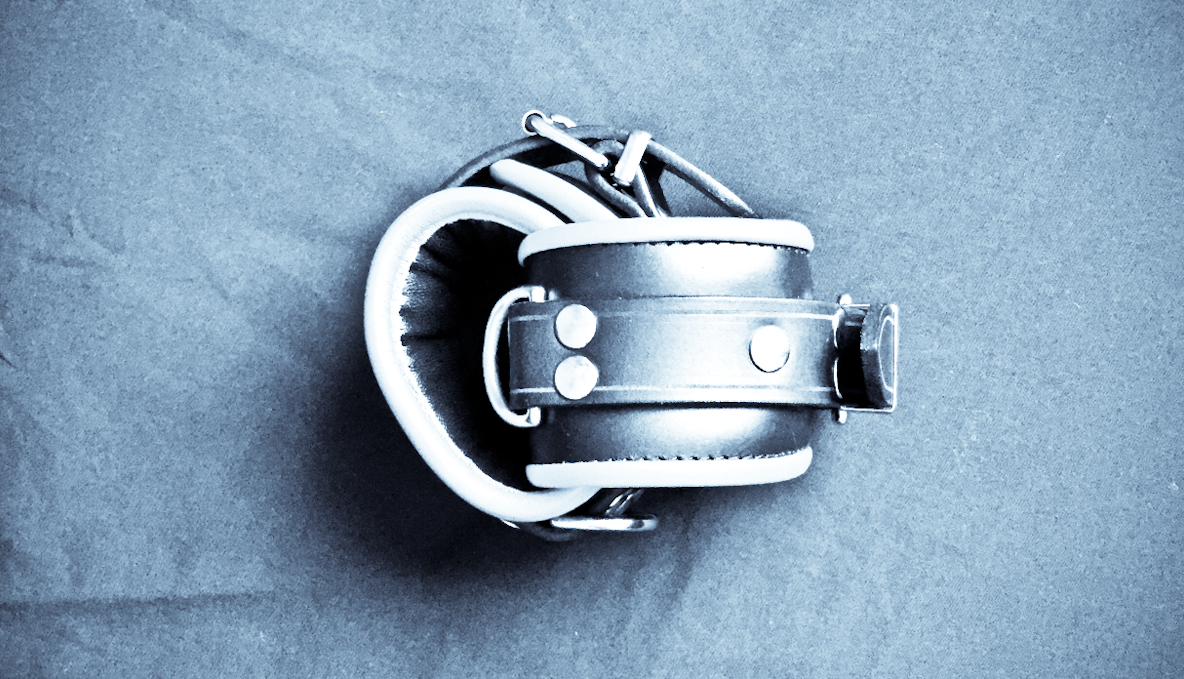
You do not have to join a particular community, or love leather or rubber, or spend your evenings in underground play spaces. For some it may be about handcuffs and a blindfold, for others total enclosure, for others extreme sensation. For others it could have nothing to do with physical sensations and everything to do with psychology. It could be about taking control, or giving up control, with no pain or restraint at all. 

For one person, it may be spending thousands on rubber clothing and dungeon furniture. For another, a simple phrase sent in a text message and a 24/7 household setup that others would have to guess at. It might involve going out to events, like clubs or munches, with others who share the same interests. For some people, no act, however apparently extreme, counts as kinky unless there is an exchange of power. 

It could be mild and playful, or it could be extreme and unusual, or combinations of all the above.

Does it have to be ‘all about sex’?

For some kink is inextricably linked with genital sex. Other people very clearly separate the two, and others are fluid in their approach. So however you feel, however you see yourself, there is no ‘one true way’.

Our society has a very poor record on acceptance of sexual diversity and many remain closeted just to feel safe

Perhaps you feel shame when reflecting on your fantasies or activities, and have never told anyone about them. You may also be struggling because:

  • What you like may have a more extreme taboo edge or safety element to it.
  • You may fear that you might hurt someone non-consensually.
  • You are happy for it to remain in fantasy, but want to be sure you are okay.
  • You have been paying for kink services and are wondering if this is okay.
  • You fear you are doing it too much, or thinking about it too much, and need reassurance that you are sane and not an ‘addict’.

If any of this troubles you, it may be helpful to talk to a therapist

Psychotherapy can help you look at the emotions underlying your current situation, and help you with any difficult feelings you may be experiencing.

It’s worth choosing carefully, however. There has been a tendency in traditional therapeutic schools of thought that any activity that is not 100% heterosexual, monogamous or vanilla (ie non-kinky) must stem from a pathology, or possible early-years damage. I have gone further into the problems with this viewpoint in a piece for Lancet Psychiatry: BDSM, Psychotherapy’s Grey Area.

I never discount the idea that this could for some people be the case, that a response to a past difficulty has evolved into a kink or fetish. And people do sometimes eroticise past experiences. But past experience may have meaning here or it may not. Be very wary if someone wishes to turn detective and start ‘uprooting’ your kink or trying to convert you.

You are not sick – you may just need to be heard. Rest assured you are not alone.

Where to find a kink friendly therapist

Further reading and research

On the subject of orientation and identity, there is an interesting discussion around this post by Clarisse Thorn: BDSM As A Sexual Orientation, and Complications of the Orientation Model

These two studies may also be of interest:


Sex work and the transactional nature of human relationships

Sonnenschirm_rot_redNew essay in Lancet Psychiatry

My latest piece is called Sex work – society’s transactional blind spot.

In the article I explore the transactional nature of human relationships and how we are encouraged to bargain with others, from a very young age, for social and emotional survival. I have focused on sex work because it is a significant cultural issue that polarises opinion and inspires much clichéd and harmful representation in art and media.

Sex workers also report poor experiences in therapy and within the mental health system as a whole.

The opinions and experience of those who actually do it are often ignored or marginalised

Even if you cannot imagine doing sex work yourself, or think you don’t know anyone who does it, it’s worth reflecting on it as an issue of labour rights, self-determination and consent.

Political support for change

Just after the piece was published, the UK Home Affairs Select Committee declared in a report that there was a very strong case for decriminalisation. Amnesty International reached a similar conclusion in 2015 which has now become policy. This move has also been supported by the Lancet.

If you are affected by any of the issues here and would like to explore them further in therapy, please get in touch.

[The image above is by Usien and can be found at commons.wikimedia.org]


Are you stuck on the Sex Escalator?

tg-1-27Today I’m talking about the repetitive sexual conveyer belt that we can find ourselves on if we pay too much attention to cultural influences and not enough to our own needs.

I’m calling it the Sex Escalator because you can sit on it and it will take you somewhere that feels vaguely elevated over and over again – and you need not think about it, ever.

Remember the ‘Relationship Escalator’?

You may well have heard of the ‘relationship escalator’, an idea that originated in non-monogamy research circles and promoted in excellent article about polyamory that I have linked to before. It’s about how relationships are culturally encouraged to follow a tried and tested formula – essentially meeting, dating, becoming a (preferably heterosexual) couple, becoming exclusive and monogamous, moving in together, getting married, buying property and having children.

This model suits many people for many reasons – but it also has a purpose, namely to uphold social cohesion and provide a foundation for a very specific way of having a family. It does not deserve to be rejected outright, but it does deserve examination because many people fall into it before realising it is not what they want or need at all. And this is when relationships can become damaging.

As with relationships, so with sex

Discussing this with friends and colleagues (and working in communities where we talk about these issues a lot), even highly creative sexual adventurers will admit to having sat on the escalator at some point in life. The process goes something like this:

  1. Kissing
  2. Manual stimulation
  3. Oral sex 
  4. Penetration (preferably PIV)
  5. Peak genital orgasm
  6. The End (someone falls asleep)

People base entire marriages around this paradigm. Any deviations from this become treats, exceptions or outliers, or simply never thought of.

And of course, parts of this sequence may be missing altogether because they were never there in the first place.

This is not to judge anyone or criticise this as a way of having a good time together. Over time you may have discovered the most efficient way to orgasm with one person – and after all it’s pleasure and connection you’re after. You may be frequently tired and you may be busy and you may have family to take care of.

The problems start when you’re increasingly unhappy – but you’re not doing anything about it.

Communication as taboo

The problems start when communication ends. For many people, unaccustomed to stating even the simplest needs, useful communication will stop as soon as mutual liking is discovered. For many people this may even come as a relief. In the UK we have a popular trope of two people getting drunk together on a date, waking up in a relationship, and then being delighted that it need never be mentioned again, perhaps for several years.

As with emotions, so with sex.

A package deal of conditioned behaviours and expectations

On the Sex Escalator:

  • Anything else doesn’t really count as sex, or is weird.
  • It’s vital to have a goal, and that goal is ‘full sex’ because the rest is just ‘foreplay’.
  • If you miss out the genital penetration, the sex is incomplete and has failed.
  • If the escalator doesn’t arouse you that much, you should keep quiet about it so as not to create disruption.
  • If the escalator doesn’t arouse you that much, you may need to seek outside help, because the problem is your fault.
  • If the escalator doesn’t arouse your partner that much, you should tell them to seek help, because the problem is their fault.
  • Obviously the penis owner will have an orgasm, because they definitely enjoy penetration. (Go here for a longer discussion on why a number of people actually aren’t into penis-in-vagina sex. Go here for a rather more brutal takedown of this sexual trope from a feminist perspective.)
  • The vagina owner really ought to have an orgasm because otherwise they must be dysfunctional and the penis owner won’t like them any more due to their imperfect functioning. 
  • You dare not discuss any of this with your partner in case they are offended or think you are about to criticise them.
  • Deviating from this pattern in any way is terribly adventurous and needs masses of preparation and expense.

I would like to think that the generations that have grown up with the internet will have found a better way, but looking at what young people seem to be learning, I am not so sure. And although this feels like a strictly heterosexual/cis model, any pairing of genders and sexualities could technically enact this. 

I also have a suspicion that this conveniently boxed scenario keeps people more heterosexually confined than they would ideally wish to be.

If the Sex Escalator isn’t working for you

If you keep on ending up having sex like this, and you’re not enjoying it, or you feel that there’s something missing – ask yourself some questions. If you have a partner, ask each other some questions.

  • Am I or my partner truly consenting to any of this?
  • Have we actually ever discussed it?
  • Do either of us really want it?

And if you’ve said to yourself and/or each other: ‘Well, this is okay enough, and if we don’t do these things it doesn’t feel like we’ve actually had sex – ‘

STOP!

If you want something different, here are some things to remind yourself about:

  • Sex does not need either a goal or a destination.

  • Genital sensation does not need to have primacy.

  • Specific activities do not have to have primacy over others.

  • There are no rules about which parts of the body should be included or left out.

  • Orgasms are nice but they are not obligatory.

  • Communicating your needs is vital. 

  • Focusing on breathing can add a whole layer of experience.
  • There is a whole world of sensation waiting for you in many areas of your body that you may not have considered.

  • Have you talked about your fantasies? Have you even thought about them?

What if you went right back to the start and asked yourself – or asked each other – what do I/we really want?

Am I overstating this? Judging by the responses I encounter when someone (or two people in a relationship) realises there is another world of sexual connection out there I am, if anything, understating it.

In a future post I’ll go into more detail about ways to expand your sexual experience.

If you’re concerned about anything I’ve raised in this post and would like to explore this aspect of your life in more detail, you can contact me here.


Bisexual life – hiding in plain sight?

2000px-Bi_flag.svg

Pink Therapy conference 2016

Last Saturday I spent the day with colleagues at Pink Therapy‘s annual conference for therapists. This year’s theme was Beyond Gay and Straight

‘There are gay bars and straight bars, but where are the bi bars?’

Someone made this point during the plenary session. Erasure is something bi people experience on a regular basis. I’ve been told more than once that the word ‘bisexual’ is a bit of an audience killer and best left off publicity materials. This is sadly unsurprising.

Bisexuality and mental health

Dr Meg John Barker reminded us that not enough studies have been done specifically around bisexuality, but what there is – sometimes the B element has to be squeezed out of the side of a larger piece of research – is unequivocal. A bisexual person is likely have worse mental health than someone who is either gay or straight. An aside from another discussion, a good proportion of people diagnosed with Borderline Personality Disorder (who are, incidentally, mostly likely to be women) also identify as bisexual. (For more research and information, see BiUK.)

Prejudice from all sides

Bisexual people experience discrimination from both straight and gay communities. Bi people are seen as fence sitters, greedy, manipulative, unstable, sex-obsessed, and indecisive, perpetually on the way from one place to another but never getting there. Women only ‘do it’ to tease or please men. It is seen as marginally more acceptable to be a bi woman than a bi man, however – bi men are either ‘gay, straight or lying.’ A bi person must experience an exactly balanced 50/50 attraction to men and women (never mind other genders), or they are fakes and must be straight. Sometimes therapists (and partners) offer to convert them, or tell them that their issues will be resolved when they ‘pick a side’.

Charles Neal, author of The Marrying Kind, talked about the lives of gay and bi men married to women, the ‘mixed-orientation marriage,’ and the misery experienced by people stifling their identities in order to remain in a socially acceptable unit. ‘Experience before identity’ was his message – but even nowadays, if you don’t identify sufficiently with one tribe over another, you may feel left out in the cold. (See also How To Support Your Bisexual Husband, Wife, Partner)

Born this way?

Current activism tends to promote sexual and gender identities as self-defined, but it wasn’t so long ago that you had to be ‘born this way’ in certain queer scenes, (and adopt one of a specific set of appearances) or you were seen as a ‘tourist’. You were ‘bi-try’ (for bi or bi-curious women entering lesbian environments) or a ‘stray’ (for bi or bi-curious men entering gay ones). And, on arriving at an event, there was that look from the door person that said ‘Your hair goes past your shoulders – are you here to write an article about us?’

Binary versus fluidity

These attitudes remind us how the desire for a binary universe is so pervasive. If you are not one thing you must be another, because of course there are only two things to be. The idea that a person’s desires may shift and evolve over time seems entirely absent. To be fair, if you have fought for years for your singular identity, you may well feel threatened by any kind of flexibility around this, but this feels increasingly out of step with younger people, for whom fluidity of identity feels as if it’s becoming the norm.

It all sounds very like the dismissive way some old-school kinksters speak of switches, ie people who are comfortable occupying both sub/bottom and dom/top roles, or have a different role depending on the gender of their play partner. And, for that matter, people who cannot accept non-binary gender identities. There is, perhaps unsurprisingly, a high proportion of bisexuality in trans communities. DK Green spoke in detail about both topics. Validation from partners is essential: ‘Does your partner see you as you see yourself?’ (Trans Media Watch has a good resources page.)

Caution around labels

A therapist simply being affirmative may in fact be damaging when a client holds multiple identities, and this can apply particularly if they are intersex. And in a flurry of anti-religionism (for sure understandable given the damage that religion has done to people with minority identities), you may trample over the fact that a queer person is religious and gains comfort from it.

Multiple intersections – multiplied difficulties

Ronete Cohen spoke about the intersection of bisexuality and race, where a bisexual person of colour can be marginalised and objectified in a number of communities simultaneously. Microaggressions are multiplied, and there is far less social support and consequently worse mental health outcomes. She gave the example of a bi person of colour asking for help dealing with stress, and being told to go to yoga. There are a number of reasons why this was inappropriate – western yoga is generally white, middle class, often expensive, promotes a particular body type, and contains potential inherent cultural appropriation.

Elsewhere during the day, someone gave another example of a therapist trying, unsuccessfully, to take mindfulness into communities of colour, having not thought through the missionary implications of this. A therapist may have training around gender, sexual and relationship diversities, but they may not have any cultural competence training around race. (See Bis of Colour for more information and support.)

Queering relationships

From the other sessions I attended:

Niki D talked about biphobia in relationships, and the difficulties of being a bisexual person in a relationship with someone who is monosexual.

Meg John Barker, using their excellent zine ‘What Does A Queer Relationship Look Like?‘ talked about queer relationships, and the fact that a high proportion of bisexuals are also non-monogamous. (The ‘Normativity Castle’ is especially pertinent here.)

Amanda Middleton presented on queer identities and offered a breakdown of Queer Theory. She outlined the slippery and paradoxical implications of queer – (for example, if a queer person experiences microaggressions, it can mean they are doing queerness well) – and the fact that identity will inevitably change over space and time.

It’s an exciting time for Gender, Sexual and Relationship Diversities therapy

Thanks to Dominic Davies and the Pink Therapy team once more for a great day and an excellent learning and networking opportunity. There’s a lot of work to do – especially around training – but this community is growing.

For videos of the main talks, go here.

Contact

If any of the issues in this post are affecting you and you would like to talk further to someone, you can contact me here.


Chemsex – film review

Chemsex - A Peccadillo Pictures release Review in the Lancet
There’s a new documentary out, Chemsex, about the cultural phenomenon of sex and drug parties on London’s gay scene. It was previewed at the London Film Festival this autumn, and my review of it appears in this week’s Lancet.

You can find the film’s trailer here. I also saw the play Five Guys Chillin at the King’s Head Theatre in Islington, which is a verbatim drama about a chemsex party constructed from many hours of interviews.

In my review I looked closely at the film itself and highlighted the public health aspects of the story – the potential for the spread of STIs through having unprotected sex while intoxicated, sharing needles when injecting, or sharing toys and lube. Also the fact that it is particularly easy to overdose on GBL.

I’ve also been reflecting on the film more globally and what else it brought up for me.

Double standards
First of all, it’s very easy to sensationalise what some might see as niche or small community behaviours, but which are in fact only more specific or extreme examples of activities that many people do on a regular basis. Plenty of heterosexual people, for example, stay up for two or more days taking drugs recreationally and having sex.

I’m also aware that a film like this could potentially encourage homophobia in those already disposed that way – just as the many documentaries about excessive public alcohol use in town centres (and the consequent taking up of A&E time) has the potential to encourage a form of classism. This despite the universality of drinking culture in the UK.

Fear of sexual agency
Secondly, our culture is obsessed with sex, but simultaneously fights to create rules about who is allowed to be having it, and how. People who actively pursue their sexual desires are very often seen as a threat, or ‘addicted’. (See my recent post on sex addiction and the concerning number of activities/behaviours which are erroneously named as symptoms of it.)

The challenge of sober sex
Finally, it’s very clear that sober sex is very difficult to accept when you’ve been used to the chemically enhanced version. A film can’t cover everything, but this is something that needs to be addressed societally, and not just in the gay community. I intend to cover this topic soon.

Read more of my published work

Find out more about how I work


Low-cost counselling and psychotherapy services in London

London skylineSeeing a therapist in private practice isn’t financially accessible to everyone.

Here’s a list of reduced-fee talking therapy services in the London area. I hope you find it useful.

PLEASE READ THIS FIRST:

 This list is not definitive or exhaustive – it is a work in progress, and I will be adding to it as time goes on. [Most recent changes 17/12/17]

• Being listed here doesn’t necessarily mean I know the service and/or can personally endorse it. It may have been recommended to me, or I may have heard of it a number of times. I am going on what is stated on the organisations’ websites so cannot personally guarantee the content.

• There will be a number of different fee scales and a variety of numbers of sessions offered, from a few to open-ended. The trend is generally towards time-limited work of up to 12 sessions, but some places offer longer. And there will also be a variety of therapy offered. Don’t be embarrassed to ask questions.

• The counsellor you see at some of these services may be in the later stages of their training. Please don’t let this put you off. In order to practise, their trainers, if they are from a reputable college, will have spent time reflecting on whether they are ready or not. Psychotherapy students generally work very hard and have to give very detailed accounts of themselves on a regular basis.

• Some therapists in private practice do offer reduced fee places. Pink TherapyThe Counselling Directory, and the BACP’s It’s Good To Talk are all good places to start looking.

GENERAL – Clients accepted from all round London

Awareness Centre (Clapham SW4)

The Blues Project at the Bowlby Centre (Highbury N5 – waiting list currently closed at 11/17, but they say they may have spaces again in 2018 – also worth contacting the main therapy team as there may be some therapists there offering lower cost)

British Psychotherapy Foundation (Scroll down for their list of reduced fee schemes. Longer-term work.)

Centre for Better Health (Hackney E9)

Centre for Counselling and Psychotherapy Education (CCPE) (Training organisation in Maida Vale W2. Also runs The Caravan drop-in counselling service at St James’s Church, Piccadilly W1)

Community Counselling (East Ham E6)

Free Psychotherapy Network (Collective of therapists offering free and low-cost therapy, mostly in the London area but also elsewhere)

IAPT (Improving Access to Psychological Therapies) (A long list of London-wide local counselling services, many of which take self-referrals. Otherwise through your GP.)

Metanoia Institute (Training organisation in Ealing W5)

Mind in Camden – Phoenix Wellbeing Service (Mental health charity in Camden Nw1)

Mind in Haringey (Mental health charity in Haringey N4)

Minster Centre (Training organisation in Queens Park NW6)

Psychosynthesis Trust (Training organisation near London Bridge SE)

Spiral (Holloway N7)

WPF (London Bridge SE1)(Fees not really low, but they have a range of types of therapy.)

BOROUGH SPECIFIC

Help Counselling (Kensington & Chelsea W11 – mainly for residents of K&C but not entirely)

Kentish Town Bereavement Service (Kentish Town NW5 – for residents of Camden, Islington, Westminster and the City of London only)

Mind in Islington (Several sites – short term therapy for Islington residents only. Longer-term work also available.)

Mind in Tower Hamlets and Newham (Tower Hamlets E3 – for residents of Tower Hamlets and Newham only)

Time to Talk (Hammersmith & Fulham; part of Mind – likely for Hammersmith & Fulham residents only)

West London Centre for Counselling (Hammersmith W6 – for residents of Hammersmith and Fulham only)

Wimbledon Guild (Wimbledon SW19 – for residents of Merton only)

BME/INTERCULTURAL

BAATN (Black, African and Asian Therapy Network) (Extensive list of free counselling services for BME clients – UK-wide with a good number in London)

Nafsiyat (Finsbury Park N4 – for residents of Islington, Enfield, Camden and Haringey only)

Waterloo Community Counselling (Waterloo SE1 – for residents of Lambeth and Southwark, and London-wide)

CANCER SUPPORT

Maggie’s (Hammersmith W6 – clients from all round London. Also other centres UK-wide.)

Dimbleby Cancer Care (Based at Guy’s and St Thomas’s Hospitals SE1 – patients from South East London and West Kent.)

HIV SUPPORT

Living Well (North Kensington W10 – clients from all round London)

River House (Hammersmith W6 – clients from Hammersmith & Fulham, Ealing, and Kensington & Chelsea only)

Terrence Higgins Trust (Online counselling; Also London and UK-wide in person services)

Metro (HIV prevention and support services in English, Spanish, Romanian, Polish and Portuguese – centres in Greenwich, Vauxhall, Gillingham and Essex)

LGBT

Spectrum Trans Counselling Service (Ladbroke Grove W10 –  free service for people who identify as trans, non-binary or are questioning their gender identity)

ELOP (Walthamstow E17 – clients from all round London)

Metro (Greenwich SE10, Vauxhall SE11, Rochester Kent ME1 – clients from all round London)

London Friend (Kings Cross N1 – clients from all round London)

Albany Trust (Balham SW17 – LGBT+ and anyone with sexual issues/difficulties)

OLDER PEOPLE

Age UK Camden (Camden WC1 – for those registered with a GP in Camden)

WOMEN

Women and health (Camden NW1 – residents of Camden only)

DRUGS & ALCOHOL

REST at Mind in Camden (Camden NW1 – support for people experiencing difficulties due to benzodiazepine dependency)