Online event organisers! Here are some ways to make your events more accessible.

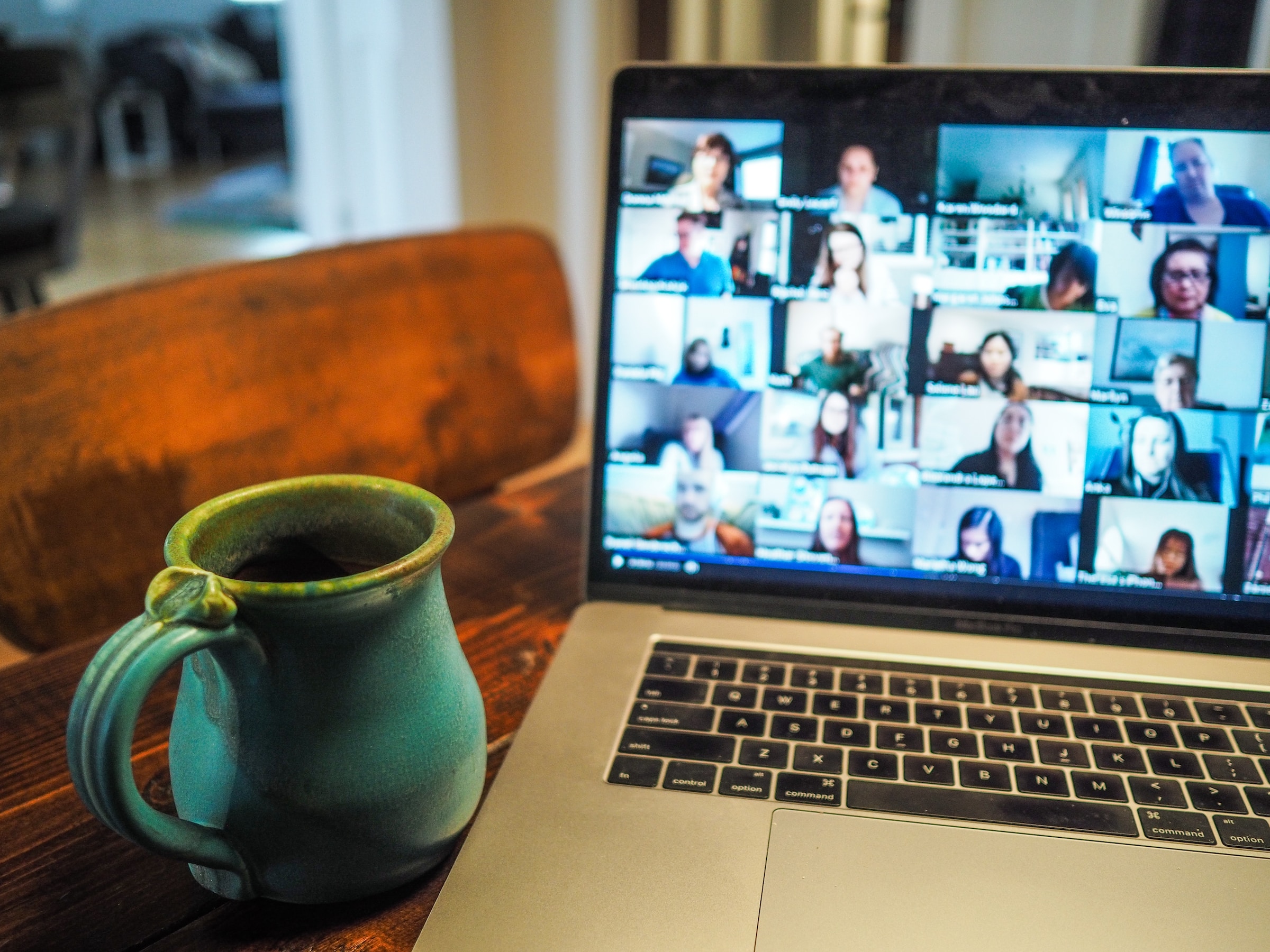
Photo of an open laptop with a zoom call in progress, and a cup of tea.
A laptop, a Zoom call, and a cup of tea. Photo by Chris Montgomery on Unsplash

Here are some things to think about when organising a Zoom event, whether seminar, training or conference. It’s not an exhaustive list, but I hope it serves as a thought starter.

Everyone who runs online events will have a different idea of how to do things – and every participant in an online meeting is an individual human with a slightly differing set of needs and a slightly different range of things that bother them and things that don’t.

Some of these things may feel trivial to some readers. But for many people they are essential.

ANNOUNCING YOUR EVENT

(1) Be clear about the nature of the event. Decide how much input you are expecting from participants, and be explicit about this.

This is especially if you will be inviting people to do role plays or other forms of experiential interaction. If you are planning a small group of less than 10 participants, and definitely if less than five, please be clear. Unless it is literally just you talking, small groups can turn into something much more intimate, where the participants are much more on show. They need to be able to make a choice on this before signing up.

Remember, this is a consent issue. Someone who is expecting to sit quietly making notes may not wish to bring their whole self to an unanticipated sharing session. And please state in advance if you will be requesting that people give long personal introductions at the start.

(2) Will a recording be made, and made available?

It’s really important to be clear on this.

(3) Be clear about attendance on the day versus purchasing a recording.

Be extra clear about this. I had to unexpectedly leave a training early one day but was still expected to pay for the recording if I wished to watch the rest of it. This isn’t okay.

(4) Stating a day of the week (as well as the date) is super helpful.

This may seem like a tiny thing, and responsibility for this likely lies with the booking system, but it’s helpful where possible.

(5) Be clear when announcing your event that you want to make it as accessible as possible.

If you do not specifically state that your event is accessible, people are likely to assume it isn’t. Invite people to contact you if they need something that you aren’t already offering.

(6) Be EXTRA CLEAR from the start on your advertising which platform you will be using, whether Zoom, Teams or anything else.

It’s very annoying to realise that the seminar you are about to join in literally 5 minutes is on a platform you never use. Sure, there may be a link, but see point (10) below. There may be reasons clicking on a link won’t work for some people, plus there is figuring out the privacy aspects of a new platform, such as blurring backgrounds and turning off the camera.

(6) CAMERAS!

This is the big one. Please state in advance whether and/or when you will expect people to have cameras on. I fully understand that in cases of confidentiality/security/safeguarding, it may be necessary for all cameras to be on in a Zoom meeting. In a training seminar or conference, however, not so much.

I sometimes get the impression (especially in the therapy world) that some online event organisers think it’s ‘not very nice’ for participants to attend without their cameras on. Attitudes can feel quite authoritarian and infantilising.

However, there are many reasons for someone to not want to have their camera on and be viewed by others, and they should not be pressured otherwise. For example:

  • If someone is neurodivergent they may struggle with the sensory overload from knowing they are on show, or the pressure to be sitting still while on view.
  • Lots of people cannot sit still in one place for a long time due to differences in learning style, focusing capacities, physical pain, or disability.
  • For mobility, pain, fatigue reasons, they may be lying down or in bed.
  • There may be others unavoidably passing through the room they are in who they don’t want to be seen, such as children.
  • They may be driving a car while listening, or doing a household task they had no other time for, and don’t want to distract others.

(7) Breakout rooms

State in advance whether these will be happening at your event. Again, as with cameras, it’s best that participation in breakouts is voluntary rather than mandatory. You could offer the option of participants reflecting solo or taking a break. Not everyone feels at their best in that context.

And remind participants about the option to put NBR (No Breakout Room) in the chat to make the tech support people aware that they do not wish to participate.

(8) If you are going to be asking your participants to use particular group participation tools, such as polling tools etc, please warn them in your pre-meeting emails.

And if these tools are new to you too, please practice with them before using them in a session.

(9) Be clear on the level of confidentiality required, so that people can make arrangements in advance about where to be during the meeting.

In other words, will a shared working space be okay, or do they need a private room?

ON THE DAY OF YOUR EVENT

(10) In your pre-event emails, please provide the zoom number and password, and not just a link!

Everyone has different tech set ups at home, and there may be a number of reasons why clicking on a link is not going to work for some people. This may cause last minute stress while they try to contact you or shift the tech they are using, causing them to miss some of the meeting.

(11) Make sure the on-the-day emergency contact details are genuine ones that will reach you, the organiser, in real time.

If there’s an issue getting into the call, eg if the link isn’t working or anything else, please make sure that the contact email is a live one that will be seen by you.

(12) Accessibility in the meeting

  • Please mute everyone as the meeting is starting and while any speaker is speaking. I know it can get chatty at the start when the host knows some of the participants, but it can leave a messy audio trail if you’re not on the case with this.
  • Remind participants that if they are going to move around, to turn their cameras off so others don’t get motion sickness. This particularly applies when someone’s computer has the face following option switched on.
  • Decide how you will all use the chat box and stick to it. Some meetings have a parallel conference going on in the chat which can be interesting, but is hellish for people who cannot focus on two things at once.
  • Ask for permission before recording a meeting. The Zoom system has this built in. Others may not.
  • Be very clear whether there will be closed captions, or interpreters of any kind.
  • It’s best to enable captions, to allow a level playing field. Zoom instructions here:
    • Sign in to the Zoom web portal as an admin with the privilege to edit account settings.
    • In the navigation menu, click Account Management then Account Settings.
    • Click the Meeting tab.
    • Under In Meeting (Advanced), click the Automated captions toggle to enable or disable it.
    • If a verification dialog appears, click Enable or Disable to verify the change.
  • Be clear on whether custom backgrounds or blurring are allowed. They can create a strobing effect which is at best distracting and at worst may cause seizures in some people. (Sometimes a good old folding screen may be best.)
  • Offer regular comfort breaks. People don’t want to miss things when running to the loo or putting the kettle on.
  • Invite people to have pronouns in their screen name.
  • Use content warnings. It is considerate to offer participants the choice of whether to stay or not during particular parts of the meeting.
  • Slides: be clear from the start whether they will be available. Ask speakers to consider making them available in advance so that participants can read along with them in their own way.

AFTERCARE OF PARTICIPANTS

If there have been difficult topics with challenging content, make yourself or someone else available for a while after the meeting ends. It’s not good to leave people alone on their sofas in a state of shock. Ditto if something difficult has happened in the meeting and people need to process it.

Fully understanding accessibility is a work in progress and we can all miss things. It’s about making sure your event is open to as many people who will benefit from it as you can.

I hope this has been useful. This is not an exhaustive list and there will be many things that I have missed – if you have the time and capacity, please let me know.


Christmas cheer? I’d love to see less ableism.

I spotted this damaged Christmas tree ornament in TKMaxx.
There was another broken one, in the form of an owl with an unintentionally heart-shaped hole in its chest. I couldn’t bear to photograph it.

This is neither a festive post nor a beautifully crafted one. You have been warned.

If anyone feels personally judged or attacked by this post, I would encourage you to sit with it. Remember this is a systemic, collective issue and it can be changed.

1. The pandemic is still going.

The pandemic is not over. Not even close. In the UK and worldwide people are still dying every day. Over two million people in the UK (let alone the world) have Long Covid. This means symptoms that continue beyond 12 weeks, and in some cases over 2.5 years. (You can end up with Long Covid from a very mild infection, not just from a transmission in the early days pre-vaccinations. ). These symptoms may be such that a person’s capacity to go about their daily life is impaired. They may have to give up work. Do you understand what it means when a person is no longer able to earn a living in this society?

2. Perhaps you have a trust fund?

Let’s cut to the chase. I may have missed something. It may be that the majority of people in the world, the UK especially, are privately wealthy and do not care if they, or someone close to them, can’t work again. I can’t help thinking that this doesn’t add up, but hey.

3. ‘But it’s just like a cold or a bit of flu, no?

Superficially perhaps. It enters the body via respiratory channels, but can affect many organs, which is why you have people experiencing chronic fatigue (remember how people with ME/CFS were gaslighted for so long?), heart rate changes, breathlessness, anxiety, cognitive deficits – do I need to say more? And a person in prevous good health could experience this, not just ‘Oh did they have existing conditions oh well there you are then nothing to do with me I am healthy.’ (Vaccinations have helped enormously, but they don’t keep it away completely.)

4. The great leveller?

The pandemic taught non-disabled people what it was like for those confined to their homes or only able to travel with difficulty and extensive planning. All those who could – (what have been called middle class workers) – took their work online. Events – (and there are a potentially lot of those in a therapist’s life like mine, for example) – went online. And it was great! You lost some of the networking capacity for sure, but it made a more equal playing field. Neurodivergent people, disabled and chronically ill people, people struggling with their mental health, those on lower incomes who can’t always get childcare, etc – lots of those people could now attend trainings and meetings. And it kept everyone safer from the virus by removing travel from the equation.

5. Not all benefited from this ‘levelling up’, however.

Anyone doing labour that cannot be done on screen had to keep on going to work in person. That’s a lot of people cleaning, delivering, processing food, working on transport, working in retail, building and of course healthcare. All of them keeping our society going. Without those workers we would have no society. Instead of treating those workers with respect (eg free masks, priority vaccinations etc), our administration played games with the entire population. 

6. Please remember the lies you were fed.

As well as being regularly and deliberately confused about what was happening via the media, with ‘bubbles’, endlessly shifting ‘tiers’ and u-turns (remember Christmas 2020), we were left with an idea that Covid-19 was some kind of naughty enemy of the British Empire that could be dealt with by using infantile language about ‘moonshots’, and maybe a really embarrassing gun battle on the Thames (sounds familiar?) with people dressed as doctors hurling custard pies at people in racist-looking virus costumes.

We didn’t quite get to ‘freedom fries’ but the F word was used, as if the doughty brits were really going to stick it to a virus. And the people in charge who pushed it out were merrily attending parties and going on holiday all along, while ordinary people died in their hundreds of thousands. People were being literally suffocated to death by misinformation, a disproportionate number of them People of Colour. 

7 ‘Then why isn’t everyone masking up wherever possible?

We have been told it’s over when it’s not. Even though it’s winter now and wouldn’t it be great not to catch all the other seasonal viruses? Every time I go on public transport in London I am one of the very few people wearing a mask. The other week, on a very crowded delayed Overground train, I was lucky enough to get a seat and therefore have a close up view of someone’s workplace pass clipped to their belt. An actual doctor working at an actual hospital – in a soupy rush hour crowd – not wearing a mask. And yes, I hear stories of hospitals and clinics not enforcing masks and staff not wearing them. (Not all, thankfully.)

8 ‘Hold on, not everyone is able to wear a mask!’

Yes. Some people have a sensory or trauma response, or a respiratory one, which means that mask wearing is acutely stressful for them and just not possible. So all the more reason for everyone else to wear one to boost everyone’s protection and allow those who can’t to live a reasonable life.

And yes masks can be pretty grim if you’re wearing one all day. (Think about the doctors and nurses with dented bruised faces.) I see why many people would be willing to take the risk – I really do see this. And yes I can see why that doctor on the overground wasn’t wearing one, as maybe he had been wearing one all day. But even so – how can we do better?

9 ‘But not everyone can afford masks, esp N95 ones!’

Yes, I agree. imagine if the government gave out masks instead of wasting millions – billions – on mysterious deals that benefit only the very few. Masks for all sounds a lot more worth it, doesn’t it? This would never happen because it might start showing people how they have been corralled into a ‘me first’ space, even while having what they have stolen from them in broad daylight.

10. ‘So why are so many events going back to in-person only, then?’

Good question! It’s like everyone’s forgotten what ‘access’ means. It is directly ableist, with all the knowledge and resources we have now, not to make your seminar/conference event a hybrid one. [As with this entire post, someone will remind me of exceptions to this. There are always exceptions.]

Unfortunately plenty of ableism goes on even in online-only events. This especially confounds me when I see it in the therapist/practitioner world. I have online access needs myself and I admit that I have become a bit of a professional annoyance to some events organisers.

11 ‘Lighten up, will you, lefty killjoy!’

No, I won’t. But I don’t want anyone to stop going to gigs, pubs, theatres, parties and on holiday either! They are a fundamental part of life for many people. But if we all did a little bit to make these things more accessible for everyone, life would be better, no? 

PSA: Until we as a society learn to look after each other better, we will remain in thrall to toxic values that are dragging us all down. Do I really need to name these values? Toryism, neoliberalism, Thatcherism and of course another F word. Of course, many brown and black and trans and queer and working class – and of course disabled – folks have been shouting about this for literally ever.

It’s not that we shouldn’t look after ourselves too, but if we remember that our actions have consequences, and if we pull up everyone behind us, then we all benefit. I’m not sure why that’s so hard to understand. We have all been encouraged to sink into an intoxicating swamp of individualised wellness. Keep working on yourself as the problem, so that you don’t see the structural issues which of course no one person can change alone and will just make you feel worse.

Best order another scented candle. But none of that will get us out of this.

12. Lefty Queers, why aren’t you talking about this?

This is part of the reason for this post. I am feeling increasingly heartbroken when attending queer events where no one is masked (or seeing pictures/videos of them online), despite this community having a higher than average number of disabled and vulnerable people in it, and a lower than average income. This is a community that often speaks of little else but ‘community’, but here seems to be talking the talk rather than walking the walk. Are you content to collude in exclusion?

(Despite my words above, I am also cynical about some usage of ‘community’ as a carry-all badge of goodness and sincerity. It often involves ingroups and outgroups which are not always acknowledged. However, this is not the post for unpacking my thoughts on this because, trust me, we would be here all week.)

13(a) Please read this important article:

Please read this piece by queer disabled activist Leah Lakshmi Piepzna-Samarasinha: Abled-Bodied Leftists Cannot Abandon Disabled Solidarity to “Move On” From COVID. I’ve been sharing it around the place and am baffled by the relative lack of engagement. There are plenty disabled folks who have been effectively written out of in-person engagement by this ongoing ableism.

13(b) And this one:

The pandemic isn’t over, and queer people shouldn’t be acting like it is by Dev Ramsawakh. Someone told me about it earlier today.

I’ll say again, if anyone feels personally judged or attacked by this post, I would encourage you to sit with it. Remember this is a systemic, collective issue and it can be changed.

14. OK I’m done

I’m tired from writing this. I will try to put some links in later on. I hope this post is at least a thought-starter for someone.

If you are still looking away in order to maintain an ‘us and them’ paradigm in terms of health and disability, please remember that however positive-thinking you are, however immune you feel to the issues here, you can still be taken from ‘us’ to ‘them’ in a heartbeat.