Therapists, are you harming your Autistic and ADHD clients? (PART TWO)

Photo by C D-X on Unsplash

Part 2/2: Negative outcomes, what you can do to avoid them, and some further resources

You’re likely here because you’ve read my previous post, Therapists, are you harming your autistic and ADHD clients? (Part One) and are interested in reading more. If you’ve just stumbled on this page, I recommend you check out Part One first.

Part One received a lot of support and resonated for many people. In response one person noted that, when handled effectively, silence can also be a positive thing for the autistic or ADHD client, as it allows time for differences in processing speeds. Someone else reminded me that supervision can also be a challenging environment for the ND therapist. Along with harm in therapy and harm in training, it feels like our industry needs to examine its approach to harm in supervision.

I know there’s a lot of talk of harm here, of damage, but we need to look deeply into this before we can start to build something better for our industry, for ourselves, and for our clients.

Of course, we’re therapists so we know that everything can be flipped on its head and reframed. And lateral thinking can absolutely apply. There may be moments where some of the interventions I describe in Part One, between a sufficiently attuned therapist and their safe-enough-feeling client might, in a particular moment, be okay and helpful. But we cannot count on it.

PLEASE NOTE

• This post is not a primer about autism, ADHD or any other form of neurodivergence.

• Please note that Autism and ADHD often co-occur, so you will see people increasingly describing themselves as AuDHD.

• The list of resources at the bottom is a starting place, an invitation to deepen your knowledge and find greater understanding.

• I do not endorse every word ever written by anyone I list here, or on the websites where these posts may appear.

• A list of red flag words, expressions, names and media output that you would do well to take care around is unfortunately beyond the scope of this post. [anyone?]

So what might the outcomes of harmful therapist behaviours, (however unintentional), be for the autistic and ADHD client?

(1) In one-to-one therapy

(a) The client leaves therapy without being helped.

Actually, simply not being helped may be the least harmful outcome. Someone may end up feeling as if this ‘failure’ was all their fault, confirming their sense that they are defective, broken, and beyond help. The therapy may have replicated how they have already been treated in other contexts.

(b) The client leaves therapy, never to return.

Their trust in people may already have been low – now it will be lower. Their internalised stigma may also increase. They may feel that getting support is just not worth the effort.

(c) The client remains in therapy but evolves strategies for pleasing the therapist.

This is of course no help to the client, but again they may be playing out a scenario familiar from the rest of their life. They mask in sessions and evolve ways to please the therapist by, for example (as I described in Part One), staring at the therapist’s forehead, or tolerating discomfort in the therapy room such as non-optimal seating arrangements, or tolerate amusement or judgements from the therapist about talking too much or getting angry about injustice, or wanting to stim. Ultimately, while this therapy might produce something positive, overall it will simply reinforce the status quo.

(d) Remember that the suicide rate is higher in autistic people and people with ADHD than in the neurotypical population.

The first of the two studies I link to there also highlights the presence of undiagnosed autistic traits in those who died by suicide. I wonder, in fact, just how many undiagnosed neurodivergent people attempt suicide. Perhaps they got labelled with ‘anxiety’ or ‘depression’ without anyone looking further, because they weren’t presenting like a ‘naughty little boy’. It is for this reason, on top of many others, that therapists need improved professional competence in this area.

(2) What happens to the parents of neurodivergent children (who may well be neurodivergent themselves), when accessing therapy and support?

Although these two posts do not focus on the specific experiences of children and young people, it’s worth looking at parents’ experiences when trying to get help – for themselves and their child. The original group discussion was particularly full of frustration and anger on this subject. It deserves a whole article on its own.

(a) Back we go to attachment theory!

This seemed almost a rite of passage for a parent trying to seek help for their child from local authorities. They would be labelled ‘enmeshed’ and pathologised as having ‘attachment issues’. Social workers, teachers, and therapists, (etc), may tell parents they are ‘overprotective’ of their children, or label someone an ‘anxious mum’ who is overreacting and ‘attention seeking,’ when the reason for them appearing to be this way is that they have had to fight for their child since they day they were born. This seemed particularly the case when the child had already been bullied or ostracised at school.

(b) Parents being accused of FII (Fabricated or Induced illness) to get their child some attention. 

Given the existing scarcity of local authority resources, it is sadly unsurprising that those with the job of gatekeeping are going to try to find ways to keep people out of the system. But seriously?

(c) The mental health impacts of fighting the system.

The stress of this for the parents, and the impact on the child or children, may drive parents and whole families to burnout. This may then itself then be pathologised by gatekeepers as ‘inability to cope’. Also, as neurodivergence runs in families, these parents may be neurodivergent themselves, so they may be doubly struggling. The judgments inherent in these attitudes and the battle for basic services simply cause more stress, anger, guilt and shame for the parents which may in turn impact the child. (It is worth reading about the history of autism and the outdated idea of therefrigerator mother.)

(d) A reminder that the system is set up to be adversarial.

Just like the benefits system, the social support system seems designed to tire people out so that they either give up and go away; submit to whatever they are being told to do; or react strongly negatively which will then ‘justify’ rejection or disqualification from support or benefits, or sanctions.

(3) What about neurodivergent therapists who are being managed or trained by other therapists?

The experience of ND therapists is a whole other topic which needs a separate post. There are a lot of us around.

(a) Neurodivergent therapists may struggle in the workplace.

Their managers may assume that all ND therapists need the same workplace accommodations, and then may react badly when the therapist asks for something specific, such as no scented products or loud clocks in shared therapy rooms.

(b) Neurodivergent trainee therapists are likely to be treated differently.

Even if someone has a diagnosis, they may feel self conscious about asking for accommodations. If self-diagnosed they may have to debate this and struggle to be taken seriously. If the trainee is undiagnosed and unaware of it they may experience all sorts of unowned poor treatment from their training organisation.

Systemic factors

It is important to reflect on where patriarchy, colonialism and the medical model collude to influence healthcare systems and public understanding, causing neurodivergent people (and their children) to be seen as annoyances and anomalies.

Many gender variant people are neurodivergent, (and many GSRD identified people as a whole). If a therapist is not sufficiently aware of GSRD identities (and worse, holds prejudiced views about them), the likelihood of damage will be greater. Similarly, for example, in the case of a white therapist working with a client of colour who is also ND.

‘Oh gosh! We’re back at identities and labels again! Can’t we get beyond this, just for once???’

When people speak, you need to listen (which is kind of what therapy is about, no?). When a whole group of people speaks, who are united by a particular identity (or label), you need to listen extra hard, particularly if you are a therapist! This needs to change at root level, which means from training organisations who provide primary trainings upwards.

Therapy has traditionally been framed by patriarchal, white western thinking. I don’t necessarily say ‘throw it all in the bin’ (not all of it anyway) but it simply isn’t questioned enough from within. There is no getting away from this. It brings a top-down aspect to therapy which can engender harm (‘therapist knows best’), and a lack of consent. If you are working as a therapist, you need to keep the ultimate consent question perpetually in mind: ‘Who is this for?’

Equally, the ‘I don’t judge’ approach sounds nice on the surface, but it is clear that if a therapist doesn’t have a good handle on GSRD, (or race, or in this case autism and ADHD), as soon as they hcome across something they have no handle on, they are likely to do exactly that. Ditto ‘I just want to help people’ – your saviourism may also do harm.

What to do next

What you need to do now is check out the people who are talking about this publicly and LISTEN TO THEM. Listen to autistic people and ADHD people and all neurodivergent people who have been in therapy and had a negative experience – or a good one.

Particularly if you are in middle age and older, go online and read what younger people are saying. A lot of people are out there putting a lot of time into explaining their lived experience in the public sphere. That is where you will find current thinking on all this.

Some older therapists maintain a lofty distance from social media and therefore from social trends. This will not help your practice. If you cannot be online much, then talk to younger people. But please don’t use your younger clients as resources!

You can also attend one of the many trainings that are available. (See below.)

‘So are you saying we should treat our neurodivergent clients like helpless little snowflakes??’

Here we come to the central issue. If therapists and their trainers mainly come from a homogenous and privileged group with little experience outside that group, they will assume their knowledge, experience, resources, and levels of resilience are the same for everyone else in society. This of course is not the case.

Remember, it is labour for a client in therapy to challenge and correct their therapist, especially when they are not sure what they are challenging them about. It’s easy for a therapist to say ‘But that’s the work, isn’t it?‘ I mean, sure, yes, in an ideal world! But there has to be trust. And if you as a therapist don’t work on your cultural competence, you are creating extra work for your minority and minoritised clients – clients who are already likely to be exhausted from navigating similar scenarios in the rest of their lives. It’s not your job to make this harder for them.

Work towards changing therapist trainings from the inside

I keep mentioning primary qualification trainings (ie Diploma, PGDip, Masters) because the way the trainers model the work will be replicated by the therapist in the therapy room.

A central issue here is the learning edge. This is the place, that is not too comfortable but also not too stressful, where we are especially open to taking in new experiences. Trainers aim to take us to this place and hold us there for just the right amount of time for us to benefit and take in the information.

But the learning edge is not a rigid boundary like a circle or square, along which everyone will have the same experience. In fact, everyone’s learning edge is different. Any individual’s learning bandwidth is going to be wider or narrower depending on many factors. One size does not fit all.

Once again, I hope this is helpful.

Resources

Below I have frankly infodumped some links. I have not read every word of everything here. If you know any good ones please tell me and I will add them – or if you think any of these are terrible.

You will notice the skew towards autism. This is due to the nature of my own existing resources. However, the more I learn, the more I find that the map of neurodivergence is a closely knit Venn diagram rather than, say, a flower. As I said above, a significant number of people with autism also have ADHD, and a fairly high number of people wth ADHD are also autistic. Hence a number of people calling themselves AuDHD. There will be much that is relevant here for many people.

Autistic and ADHD clients in therapy – experiences

Therapy & Neurodivergence

Autistic Adults Experiences of Counselling

Autistic people should not have to educate their therapist

An Autistic’s Vision for Neurodiversity-Affirming Therapy

Neurotypical psychotherapists and autistic clients

Autistic Therapy: 8 Things to Consider

Research and media

‘Autistic while black’: How autism amplifies stereotypes

Barriers to healthcare and a ‘triple empathy problem’ may lead to adverse outcomes for autistic adults: A qualitative study

Black adults who live with ADHD

Counselling Clients with ADHD

‘Living in a world that’s not about us’: The impact of everyday life on the health and wellbeing of autistic women and gender diverse people

’No you’re not’ – a portrait of autistic women

Race and ADHD

Silver linings of ADHD: a thematic analysis of adults’ positive experiences with living with ADHD

The lived experiences of adults with attention-deficit/hyperactivity disorder: A rapid review of qualitative evidence

CPD TRAINING ORGANISATIONS

Free2BMe, Neurodiversity training, specialist neurodivergent support

• Vanguard Neurodiversity Training

• Aspire Autism Consultancy

• The Autistic Advocate

Reframing Autism – Autism Essentials

• Aucademy

PEOPLE TO FOLLOW ONLINE

There is a very large number of ND influencers who are producing a lot of content, particularly on Instagramand still on Twitter (X). This is a small selection and I have undoubtedly missed out some good ones.

autistic_callum_ (Tw and IG)
neuroclastic (Tw and IG)
neurodivergentrebel (Tw and IG)
autienelle (Tw and IG)
neurodivergent_insights (Tw and IG)
neurodivergent_researcher (IG)
autisticflair (IG)

annmemmott (Tw)

DrRJChapman (Tw)

AJ Singh / AJ Singh LinkedIn

• Black Girl Lost Keys / @blkgirllostkeys

Leanne Maskell

• Neurodivergent Rebel

The Thoughtspot: How being autistic is linked to ego death

BOOKS TO READ

• Edward M Hallowell & John R Ratey ADHD 2.0 New Science and Essential Strategies for Thriving with Distraction – from Childhood through Adulthood

• Eva A Mendes & Meredith R Maroney Gender Identity, Sexuality and Autism: Voices from Across the Spectrum (Foreword: Wenn Lawson)

• Anand Prahlad The Secret Life of a Black Aspie: A Memoir

• Devon Price Unmasking Autism: The Power of Embracing Our Hidden Neurodiversity (also on Instagram)

• Bianca Toeps But you don’t look autistic at all

• Pete Wharmby Untypical – How the World Isn’t Built for Autistic People and What We Should All Do About it (Also on Instagram and Linked In)


Therapists, are you harming your autistic and ADHD clients? (Part One)


Photo by Sid Verma on Unsplash

Part 1/2: Assumptions, Interventions, and When Good Intentions Go Bad

This post comes out of an online discussion involving a number of therapists who work with neurodivergent (ND) clients, many of whom are themselves ND or are parents of ND children. There was a lot of frustration expressed. I have summarised the discussion here and added some thoughts of my own.

I sense a wave building around this topic. Personally, it’s helping me crystallise some of the thoughts I’ve been having since long before I trained as a therapist but, until recent years, I was not able to name.

Why am I interested in this?

I am late-diagnosed ND. This has been highly impactful. As a previously undiagnosed ND client in therapy, I found myself on the receiving end of some of what you read here. And before I found greater understanding, as a therapist I may have also enacted some of these things myself, or at least believed in them. 

PLEASE NOTE 

• This article cannot be exhaustive, and cannot be a full-on explainer – it could easily be a long form essay or a book – but I hope it will be a conversation starter. In part two I will link to further resources.

• The main focus of this post is on working with adults rather than children.

• The online discussion focused mainly on autism, ADHD and AuDHD, so those identities are the priority here, but the neurodivergent umbrella (which covers both developmental and acquired neurodivergence) is way more expansive. However, many of the scenarios I describe here could apply across the board.

• If I have linked to an article on a particular website, it doesn’t mean I agree with everything else on that website.

• For brevity I will often be using the acronym ND in this article, short for ‘neurodivergent’ or ‘neurodivergence’. (NT = neurotypical).

‘Wait! You can’t be talking about MY modality, surely?!’

If you are a therapist reading this you may already be feeling on the defensive, so please give yourself some time. And, actually, there is no need to descend into modality wars – because there is literally no therapeutic modality that cannot be used harmfully with a neurodivergent client! 

Any therapeutic modality (as well as the therapy world itself) may become ossified without constant self-reflection and consideration of the shifting social context as well as increasing awareness of neuro difference. For example, out in therapy land you will find folks who believe that, for example, Unconditional Positive Regard and Attachment Theory, are immutable concepts like the sun rising again.

Also – and this is really important – a lot of therapy research has been carried out by, and with, white neurotypical people, which potentially limits their value to many. 

Much of what I’ve written below fits within the contemporary definition of gaslighting. The word has come a long way since the old movie, Gaslight. In essence, it’s about misusing power over another person by telling them that they don’t know their own mind. 

This list is long. I’ve laid it out as simply as possible.

ONE – RIGID ADHERENCE TO MODALITY

I go into further detail in the sections below, but here are some obvious ones:

(a) Being determinedly non-directive despite the client needing, and requesting, structure and clarity. 

(b) Not answering direct questions from the client without going into a whole ritual dance of ‘I wonder why you are asking that’ first is often unhelpful. [This is similarly unhelpful when a client is also GSRD (Gender, Sex and Relationship Diversity) identified and may welcome a therapist explaining or disclosing.] Psychoeducation is valid and may bolster a client’s sense of autonomy. For example, if someone is having issues at work, they may need help to understand the covert meanings of what is going on, and so start to protect themselves from power games played by colleagues. A client may feel abandoned if the therapist does not support them when they ask about something.

(c) Therapist silence can be highly detrimental. The inherent slipperiness of the blank screen technique can simply be torture to an autistic client who may be seeking rules to work by, or an ADHD client experiencing RSD (Rejection Sensitive Dysphoria).

(d) Relying on specific jargon, eg ‘splitting’, when the client shows strong emotion; or if they are talkative, being told this is ‘ego defence’ or ‘resistance’. (The irony of this rigid adherence may not be lost on an autistic client who may have previously been criticised for their ‘rigidity’.)

(e) CBT-style thinking: No one (ND or not) should be encouraged to see their thinking as defective, and be encouraged to change their behaviour as if they are the one at fault, when the issues are likely their environment and lack of accommodations.

TWO – THERAPIST ASSUMPTIONS

(a) ‘Of course it’s not autism or ADHD – it must be trauma!’

Being autistic or ADHD does not mean the person is automatically traumatised. But due to the way ND people are often treated from a young age, they are very likely to be traumatised because of this. Being either diagnosed and stigmatised, or living undiagnosed and spending life thinking they are defective or useless – that for sure is trauma.

(b) Of course it’s not autism or ADHD – It must be attachment issues!’

There was particularly pronounced anger in the group about this, particularly from parents of ND children. I go into more detail on this in part two, on negative outcomes. There are many critiques of attachment theory and it is not an immutable law.

(c) ‘Isn’t this client just avoidant?’

The alleged avoidance may actually be alexithymia. Lack of ability to name feelings is one reason why an ND person may find life difficult, and be bullied and abused because they are simply unable to express what they are feeling or protest against it. Also, when you have been stigmatised because of who you are, you may well have learned to hold back as an aspect of masking, for safety.

If the client says they don’t know the answer to something, or cannot name how they are feeling, this is not an invitation for the therapist to start pushing them as if they are hiding the truth from themselves.

(d) Assuming deficits rather than differences

Using the medical model of cognitive or behavioural deficits, while not understanding, say, sensory processing differences or monotropism, is not helpful, and neither is assuming the client is broken or disordered and needs fixing. The therapist may rigidly adhere to the DSM, which assumes a deficit model. The therapist may try to get the client to change or deny their ND characteristics, and when this doesn’t work the ND client leaves feeling broken (see part two). This will not help a client work on undoing the internalised ableism they are likely experiencing.

(e) Not understanding the autistic sense of injustice and moral injury

‘I can’t understand why you’re still angry about that!’ It is infantilising and frustrating when a therapist regally waves away a client’s lingering sense of injustice. (Poorly held therapy may of course incite this feeling in the client also.) This may be compounded by the power dynamic between therapist and client, highlighted by, for example, gender, race or class differences.

(f) Assuming the client is ‘nervous’ or ‘anxious’ 

It’s important not to assume the client is nervous just because they are stimming in various ways, or they are talking a lot about special interests, which a therapist may dismiss as ‘obsessions’. Also many ND people may process what’s going on for them out loud and rapidly in a way that may seem over detailed, or a distraction, to a therapist who is not aware. If a client talks fast this may just be how they talk, rather than a sign that they are stressed and need to calm down.

(g) Infantilising the client for their ‘compliance’

A client who pays on time and turns up on time may be held to be ‘compliant’. This in autistic people may be viewed as something childlike or even negative rather than cooperative.

THREE – UNHELPFUL INTERVENTIONS

(a) ‘You’ve got to make them feel the feelings!’

Many ND clients are already feeling a lot of feelings and a therapist pushing them to feel more will not be therapeutic. Ditto the technique of goading the client into anxiety or anger in order to get them to have the feeling again in the ‘safe space’ of a transferential relationship in the therapy room. 

Also, a client may express feelings via all sorts of media, metaphor, simile, imagery, sounds, movements, creativity as a whole, and their special interests, rather than direct description. 

(b) ‘Let’s do some meditation!’

Speaking as someone who experienced the query ‘Have you tried meditation?’ many times in a therapeutic context, there are actually many people who cannot sit still and focus inwards, and for whom this may be actively detrimental. Focusing on the breath or doing body scans (see below) may be traumatic and bring up bad memories. In fact, meditation can be anything you want it to be, eg dancing or cleaning, but this is rarely pointed out. When I explained that traditional meditation methods did not work for me, there was often an implication that I just hadn’t tried hard enough, which is often directed at ND people.

Similarly with guided visualisations – someone who is aphantasic or hyperphantasic may struggle.

(c) ‘Let’s do a body scan!’ or ‘Let’s explore your bodily felt sense!

Many ND people struggle with interoception and may be unable to access what is apparently being asked for. Also, someone with sexual trauma (of which there is a higher than average incidence among autistic girls and women) may find themselves going into a fawn (compliant) response when asked to do things with their body, which will leave them feeling worse afterwards.

(d) ‘Why aren’t they looking me in the eye? I need to do something about this.’

The therapist may interpret a client not looking them in the eye as denial, avoidance or dishonesty. Actually, eye contact is not the universal positive this would seem to imply. In many cultures it is seen as disrespectful to look someone in the eye, particularly someone in authority. Some ND clients who struggle with eye contact will simply evolve a way of staring at a point on the therapist’s forehead and hope that it’ll do – thereby distracting them from the work.

(e) Pathologising a client being late for sessions

Again this is treated as if it must be avoidance, when it may be executive functioning or memory. Some people with ADHD really struggle with this.

(f) Pathologising a client’s special interests

Someone might have an aspect of social justice or any kind of politics as a special interest. If this makes the therapist uncomfortable this is for them to work on.

(g) Expecting homework tasks to be completed

Many clients struggle with homework for all sorts of reasons. Making non-completion (non-compliance?) a thing may add to client stress. There may also be echoes from challenging schooldays here, as well as the impact of PDA (conventionally known as Pathological Demand Avoidance, but also known as Pervasive Drive for Autonomy).

(h) Suggesting the ND client has a personality disorder or other pathology

While this takes us closer to psychiatry, it’s still worth remembering that ‘personality disorder’ as an idea is often used harmfully, and the diagnosis of BPD/EUPD is often used stigmatisingly against young women, queer and trans clients, People of Colour and ND clients when, ironically, it is often trauma that is manifesting. Similar applies when suspecting the ND client is a ‘narcissist’.

FOUR – WHEN GOOD INTENTIONS GO BAD 

(a) Not raising the possibility that a client may be neurodivergent

Generally clients are open to hearing this. Yes, it has to be done with care as most therapists are not qualified to diagnose – but it can absolutely be explored. But withholding this possibility may cause harm to the client in the long run. 

(b) Not wanting to label the client

Following on from the above, some therapists cling to the idea of ‘Why do we need labels?’ [See also: working with GSRD clients] and it generally comes from a place of privilege (or structural social advantage). This may cause them not to suggest a client may have ND traits. Actually, labels help people find their peers and make adjustments to their lives where they can, and feel as if they aren’t going mad. This can also help prevent burnout from trying to survive in a neurotypical world and keeping up with neurotypical peers.

(c) Normalising the client as a therapeutic goal

A therapist’s goals may be to make the client fit better into society. This may come from a place of good intention, by wanting to rescue the client from their struggles. However, this is likely to result in the client masking even further, on top of what they are already doing. Therapists need to understand ND masking rather than pathologise it. 

(d) Assuming that the client always has the answer

This may appear to contradict some of what I am saying, but sometimes the client does not have the answer because they may not be aware they are autistic or ADHD and so may not have the answer that needs to be voiced. Open-ended questions may not always be helpful here.

(e) Assuming that all ND stereotypes apply to all ND people

Such as: Autistics have no empathy and are good with numbers; ADHD people are lazy and lose their keys all the time and can’t sit still. Assuming all ND people are the same does not help. For example, autistic people are often hyper-empathic and this contributes to many challenges of burnout and sensory processing. 

(f) Therapist has previous knowledge about autism but their knowledge is outdated

This is why many autistic and ADHD people refuse to engage with trainings, seminars or research where those teaching or writing are not autistic, ADHD or otherwise ND themselves. Also, some organisations/individuals are still promoting ABA (Applied Behaviour Analysis) therapy which is held in very low regard in the autism community.

(g) Lack of understanding of the Neurodiversity Paradigm

This may manifest as dismissing neurodivergence as a ‘young people with green hair on the internet thing’. [See also therapist’s attitude to gender variance; and there is a high correlation between gender variance and neurodivergence.] The therapist may infantilise a client who wants to explore themselves, or try to debate them either about the diagnosis they have received, or their self-diagnosis. Another issue is not understanding why a person might choose to self diagnose, or why they may have no option otherwise.

(h) Issues in the therapy room or when working online

A practitioner may think they have made their therapy room more inviting, but this is not necessarily the case. Bright fluorescent lights, ticking clocks, scented air fresheners, flickering lights or candles, insisting that the client remains sitting still in their seat and that the seat is directly facing the client, may all cause stress. Online, insisting the client is not lying in bed. [I’m also aware of challenges to this – that sometimes changing position can be helpful.] Insisting that the client leave their camera on.

CONCLUSION TO PART ONE

I can hear many theoretical objections to the above already! But remember this is real examples from real people we are talking about. Other ND folks may have had better experiences than the above, and there is no perfect therapy.

In part two [coming soon] I am looking at negative outcomes, suggestions of what you can do next, and a list of resources.


Online event organisers! Here are some ways to make your events more accessible.

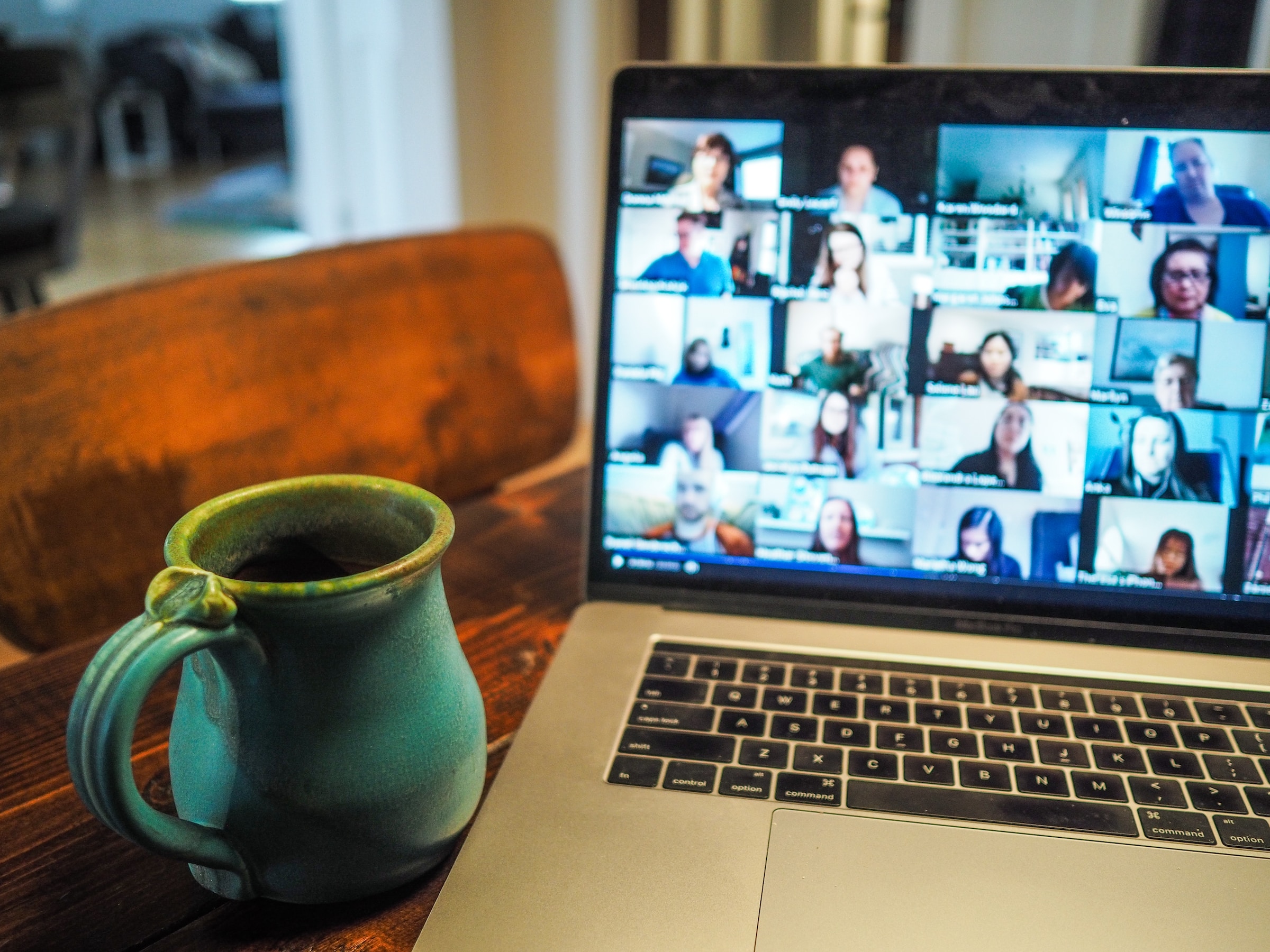
Photo of an open laptop with a zoom call in progress, and a cup of tea.
A laptop, a Zoom call, and a cup of tea. Photo by Chris Montgomery on Unsplash

Here are some things to think about when organising a Zoom event, whether seminar, training or conference. It’s not an exhaustive list, but I hope it serves as a thought starter.

Everyone who runs online events will have a different idea of how to do things – and every participant in an online meeting is an individual human with a slightly differing set of needs and a slightly different range of things that bother them and things that don’t.

Some of these things may feel trivial to some readers. But for many people they are essential.

ANNOUNCING YOUR EVENT

(1) Be clear about the nature of the event. Decide how much input you are expecting from participants, and be explicit about this.

This is especially if you will be inviting people to do role plays or other forms of experiential interaction. If you are planning a small group of less than 10 participants, and definitely if less than five, please be clear. Unless it is literally just you talking, small groups can turn into something much more intimate, where the participants are much more on show. They need to be able to make a choice on this before signing up.

Remember, this is a consent issue. Someone who is expecting to sit quietly making notes may not wish to bring their whole self to an unanticipated sharing session. And please state in advance if you will be requesting that people give long personal introductions at the start.

(2) Will a recording be made, and made available?

It’s really important to be clear on this.

(3) Be clear about attendance on the day versus purchasing a recording.

Be extra clear about this. I had to unexpectedly leave a training early one day but was still expected to pay for the recording if I wished to watch the rest of it. This isn’t okay.

(4) Stating a day of the week (as well as the date) is super helpful.

This may seem like a tiny thing, and responsibility for this likely lies with the booking system, but it’s helpful where possible.

(5) Be clear when announcing your event that you want to make it as accessible as possible.

If you do not specifically state that your event is accessible, people are likely to assume it isn’t. Invite people to contact you if they need something that you aren’t already offering.

(6) Be EXTRA CLEAR from the start on your advertising which platform you will be using, whether Zoom, Teams or anything else.

It’s very annoying to realise that the seminar you are about to join in literally 5 minutes is on a platform you never use. Sure, there may be a link, but see point (10) below. There may be reasons clicking on a link won’t work for some people, plus there is figuring out the privacy aspects of a new platform, such as blurring backgrounds and turning off the camera.

(6) CAMERAS!

This is the big one. Please state in advance whether and/or when you will expect people to have cameras on. I fully understand that in cases of confidentiality/security/safeguarding, it may be necessary for all cameras to be on in a Zoom meeting. In a training seminar or conference, however, not so much.

I sometimes get the impression (especially in the therapy world) that some online event organisers think it’s ‘not very nice’ for participants to attend without their cameras on. Attitudes can feel quite authoritarian and infantilising.

However, there are many reasons for someone to not want to have their camera on and be viewed by others, and they should not be pressured otherwise. For example:

  • If someone is neurodivergent they may struggle with the sensory overload from knowing they are on show, or the pressure to be sitting still while on view.
  • Lots of people cannot sit still in one place for a long time due to differences in learning style, focusing capacities, physical pain, or disability.
  • For mobility, pain, fatigue reasons, they may be lying down or in bed.
  • There may be others unavoidably passing through the room they are in who they don’t want to be seen, such as children.
  • They may be driving a car while listening, or doing a household task they had no other time for, and don’t want to distract others.

(7) Breakout rooms

State in advance whether these will be happening at your event. Again, as with cameras, it’s best that participation in breakouts is voluntary rather than mandatory. You could offer the option of participants reflecting solo or taking a break. Not everyone feels at their best in that context.

And remind participants about the option to put NBR (No Breakout Room) in the chat to make the tech support people aware that they do not wish to participate.

(8) If you are going to be asking your participants to use particular group participation tools, such as polling tools etc, please warn them in your pre-meeting emails.

And if these tools are new to you too, please practice with them before using them in a session.

(9) Be clear on the level of confidentiality required, so that people can make arrangements in advance about where to be during the meeting.

In other words, will a shared working space be okay, or do they need a private room?

ON THE DAY OF YOUR EVENT

(10) In your pre-event emails, please provide the zoom number and password, and not just a link!

Everyone has different tech set ups at home, and there may be a number of reasons why clicking on a link is not going to work for some people. This may cause last minute stress while they try to contact you or shift the tech they are using, causing them to miss some of the meeting.

(11) Make sure the on-the-day emergency contact details are genuine ones that will reach you, the organiser, in real time.

If there’s an issue getting into the call, eg if the link isn’t working or anything else, please make sure that the contact email is a live one that will be seen by you.

(12) Accessibility in the meeting

  • Please mute everyone as the meeting is starting and while any speaker is speaking. I know it can get chatty at the start when the host knows some of the participants, but it can leave a messy audio trail if you’re not on the case with this.
  • Remind participants that if they are going to move around, to turn their cameras off so others don’t get motion sickness. This particularly applies when someone’s computer has the face following option switched on.
  • Decide how you will all use the chat box and stick to it. Some meetings have a parallel conference going on in the chat which can be interesting, but is hellish for people who cannot focus on two things at once.
  • Ask for permission before recording a meeting. The Zoom system has this built in. Others may not.
  • Be very clear whether there will be closed captions, or interpreters of any kind.
  • It’s best to enable captions, to allow a level playing field. Zoom instructions here:
    • Sign in to the Zoom web portal as an admin with the privilege to edit account settings.
    • In the navigation menu, click Account Management then Account Settings.
    • Click the Meeting tab.
    • Under In Meeting (Advanced), click the Automated captions toggle to enable or disable it.
    • If a verification dialog appears, click Enable or Disable to verify the change.
  • Be clear on whether custom backgrounds or blurring are allowed. They can create a strobing effect which is at best distracting and at worst may cause seizures in some people. (Sometimes a good old folding screen may be best.)
  • Offer regular comfort breaks. People don’t want to miss things when running to the loo or putting the kettle on.
  • Invite people to have pronouns in their screen name.
  • Use content warnings. It is considerate to offer participants the choice of whether to stay or not during particular parts of the meeting.
  • Slides: be clear from the start whether they will be available. Ask speakers to consider making them available in advance so that participants can read along with them in their own way.

AFTERCARE OF PARTICIPANTS

If there have been difficult topics with challenging content, make yourself or someone else available for a while after the meeting ends. It’s not good to leave people alone on their sofas in a state of shock. Ditto if something difficult has happened in the meeting and people need to process it.

Fully understanding accessibility is a work in progress and we can all miss things. It’s about making sure your event is open to as many people who will benefit from it as you can.

I hope this has been useful. This is not an exhaustive list and there will be many things that I have missed – if you have the time and capacity, please let me know.


If you could choose to live without a physical body, would you?

When I ask people this question, whether my clients or my friends, the answer is nearly always yes.

To clarify, this post is not specifically about:

  • Spirituality, the spirit or the soul (although it could be, depending on your beliefs); 
  • Cryonics, or the fantasy of having your brain frozen and stored until technology has developed to the point where you can be reanimated (although it could be, depending on your beliefs); 
  • Physical disability (although it could be, depending on your situation and experience).

I am speaking about the sense of freedom you could have if your physical body wasn’t confining you emotionally, mentally, relationally, spiritually and politically.

Anyone may feel this – no matter how outwardly successful they may be, or how comfortably and conventionally their body functions.

If you are, for example, read as a woman or femme or female or feminine, (no matter what gender you were assigned at birth), you will know that you cannot move through the world without your physical body being scrutinised.

You will be informed constantly that your body (and therefore you) is either too much or not enough, sometimes simultaneously, and the goalposts move faster than you can adapt to their constant repositioning. You are relentlessly beholden to the opinions and assumptions of others. (Or perhaps you are read as not feminine enough. )

You are constantly aware of being on show, and of the consequent risk of mockery or violence, so your energy is drained and your nervous system taxed by being on constant alert.

It’s hard to challenge patriarchy (or any other embedded societal structure) when it has your face gripped in its hands and is unblinkingly staring you out.

Imagine this not happening to you.

Imagine no more comments about your weight or your face or your presumed sexual capacity. Imagine that you could go where you wanted without fear.

Actually, people of all genders have replied to this question with a yes.

And this is not just about gender. Much of society believes that others owe them their bodies – whether in terms of race, class, or disability. What if we, as individuals, could choose not to have these bodies? We could be free of so many demands. 

What if we could exist without a body, and in our chosen invisible shapes and dimensions?

What if you could shapeshift your bodyless self, and be infinitesimally small in one moment, all-encompassingly huge in another.

And what if it was up to you whether you experience sensation at all? If you struggle with the demands of sensory processing, what would it be like to be able to choose what, and how much, you experienced? What if we could choose where our imagined external boundary is – if we even wished for one at all?

As a late diagnosed neurodivergent person, I now have greater understanding of my own relationship with touch and movement, and why it was never as straightforward as it seemed to be for others. Interoception and proprioception are hard work at times – what if we didn’t have to navigate them?

In contrast to much social media output, to feel less can be a luxury.

Imagine you could feel just enough to get by and more easily navigate a world that constantly threatens to engulf us with its own needs and desires?

I spent a number of years in somatic and sexual experiential spaces where (consensual) touch was central, and participants were encouraged to be fully present. When we experimented with up-regulating and down-regulating breaths, it occurred to me that some people are already feeling more than is comfortable for them, and not all of the processes we entered into were helpful. Some of us, because of our previous experiences or simply because of who we are, already feel too present. The only way to tolerate this is through self-removal, or dissociation.

Remove the physical body and there could be so much more, so much more to do and be. And what could sex be?

I’m aware of the multitude of beliefs and philosophies that hang off this thought experiment, and how we could go down any number of roads when talking about it. (And I’m aware that my utopia becomes a little fuzzy, because who would choose to lose their corporeality and who would keep it? And what power structures might ensue?)

I’m aware that technology can partially take us there. As can meditation. As can drugs. Partially.

So let’s come back to the beginning. If you could live without a physical body, would you?


Looking back on 10 years as a GSRD therapist

Today is the 10th anniversary of my first private practice client coming through my door. I’m going to mark the day here.

Becoming a therapist was a fiery process for me. Some challenging things happened during my core training that impacted me a lot as I moved into life as a therapist. Like many traumatic experiences, while I wish these things had not happened, they gave me greater understanding of the system therapists operate in. This politicisation was very useful to me as I developed as a practitioner. Throughout that period I was experiencing similarly intense shifts elsewhere in my life.

A lot has happened in 10 years, to me and to the industry, and in the lives of my clients and colleagues. This is a blog so I’ll keep it concise! I cannot cover everything here. You can assume I could write a whole standalone piece on everything I mention below.

THE GOOD

Retraining as a therapist in midlife

If this is you, your energy levels and capacities are changing and your life choices are shifting. (See also, of course, menopause.) Your experience when training, and coming into the work, will depend on your existing life experience and resources. At midlife you have been around the block, and while your life experiences will not automatically make you a good therapist, they will be useful. 

If you are already well-resourced financially your training experience will be very different to those who aren’t. I don’t recommend juggling the final years of your training on an unpredictable self-employed income with no savings and no credit! But I did it and I’m grateful to past me for hanging in there. 

The evolution of Gender, Sex and Relationship Diversity (GSRD) therapy

I was extremely lucky, in 2013, to find the Pink Therapy community (practitioner directory here). I cannot overstate the importance of this to me as a therapist. 

Bringing LGBTQIA+ people together with people who are consensually non-monogamous and/or kinky, and/or who do sex work, makes for a larger, louder group and a wider range of experience. Particularly as many of those identities and lifestyles cross over.

When I started, GSRD was GSD (without the R), and then someone suggested that relationship diversity ought to come in, to reflect all forms of CNM (Consensual Non-Monogamy). ‘Sexual’ later became ‘Sex’, to include the experience of Intersex people. It’s been amazing to see more and younger therapists come in, and to see more and more GSRD trainings being offered. 

In terms of sex and gender specifically it’s been good to see a greater understanding and acceptance of fluidity (as opposed to essentialism or ‘born this way’) as time has passed, and an expansion of the idea of ‘queer’. 

Sexology

In parallel with GSRD, sexology as a discipline has grown in stature and become normalised. The UK has the Contemporary Institute of Clinical Sexology. There has been an explosion of sex educators on social media. When I was doing sex media in the 2000s there were sniggers – ‘LOL what do you really want to be doing?’ – as if no one could ever take sex seriously as a topic, despite its universality. I am very happy to see that attitudes have shifted a lot. People are doing research around porn, and sharing information (eg Facts of Porn), and favouring ideas of compulsive sexual behaviour over outdated concepts of sex addiction. 

Sex work

Sex work is being discussed increasingly as an issue of labour rights and of decriminalisation rather than something that brings the world in general (and the therapy industry in particular) into ‘disrepute’.

Consent

Consent has been talked about more and more and I am grateful to those at the forefront of this. I have been on a huge journey around consent, in both my personal and working lives. Many people now offer training and information around what consent can look like, and what to avoid (eg The Art of Consent‘s downloadable guides; the Consent Collective; and the Wheel of Consent).

It takes a while to absorb the fact that just because you want something doesn’t mean the other person wants it too. We do well to ask ourselves ‘Who is this for?’ before any interaction, whether instigated by you or the other person. My greater understanding has come out of my time in kink and somatic sexology. But my heart breaks for much younger me – and thousands, millions, of others.

When touch is involved, consent is essential. But consent is essential whether touch is involved or not. It’s caused me to think more and more about what consent means in the therapy room.

Trauma

Our understanding has increased and this is important. It is about the individual as much as about what happened to them. Over the years I have expanded my understanding of trauma and CPTSD – I did not realise for a long time that I was experiencing it from a young age. For sure, I knew enough about it and that others experienced it. But me? No, surely not. Many people experience chronic relational trauma from childhood and its impact is incalculable.

The rise of Counsellor Power

Counsellors have been talking back to the industry for a while now, and this movement has grown and grown. (See Counsellors Together UK) There has been increasing fightback around exploitation and being expected to work for free, and against recent changes to the industry that resemble Brexit both in their unfitness for purpose, poor evidence base, and the non-consensual way they are being implemented (see below).

Thankfully therapists nowadays have a union, the Psychotherapy and Counselling Union (PCU), which also supports trainees. Founded in 2016, the PCU did not exist when I really needed them. I wonder how different my experience would have been if I had had them by my side.

THE BAD

OK, so there are a few qualifiers to what I’ve said above.

Despite GSRD now being officially a therapeutic modality, GSRD therapists are still a relatively small community. Overall, the therapy industry as a whole remains highly conservative. Also very white and middle class. I get a strong sense of a group of people holding on very tightly to something and refusing to let go.

In the case of sexology we are still not talking deeply enough about what sex means and who gets to say what it is and who has the power to create this narrative.

Also, there are still therapists who want their sex worker clients to stop doing sex work before the therapy can start. Sex workers still have to think very hard before disclosing to their therapists.

The trauma therapy industry has proliferated and trauma therapists who don’t understand trauma has become a disturbing theme. There are still, apparently, therapists who tell clients that the work cannot start until the client stops dissociating. One high profile trauma training site used to put the names of people who had purchased their products along with their home cities literally on the front of their website. A while back I pulled out of a trauma training just before it started because one of the admins (a therapist) shared all the participants’ home addresses and phone numbers with each other, without warning or obtaining consent. 

And people are still being labelled ‘borderline’ when they are actually traumatised or neurodivergent, and this label is still being dumped onto young women, queer and trans people, causing further stigma. I’ve actually seen high profile therapists on Twitter use ‘borderline’ as a way to put someone down during an argument. (Therapists on the internet is a rich and concerning topic which I will spare you today.)

The attack on Trans rights

Trans rights have been increasingly under attack across the UK over the last 10 years and more. This ongoing attack has found its way into the therapy industry, partly in the form of conversion therapy. The fact that this is happening represents a failure of human rights awareness and of feminism, a lack of understanding of patriarchy, and a lack of respect for humanity. To see this manifesting among therapists is disturbing and highly distressing.

Therapeutic harms

Harm in therapy is being discussed more and more (and I myself have absolutely been harmed in therapy) as well as harm in training (ditto). It’s important to remember that one mirrors the other. I have heard terrible stories of trans trainees being bullied, debated with by facilitators, and expected to educate other students; endless racism and classism; lack of regard for, and understanding of, systemic and intersectional issues; and breaches of confidentiality.

If it’s happening in training it’s happening in the therapy room.

Racism and white supremacy

Where racism and white supremacy are concerned, not enough change is happening. I don’t see enough will to make this profession accessible to those who are minority or global majority identified. There are a number of practitioners offering books and courses that provide opportunities for self (and organisational) reflection. For example: Race Reflections (Guilaine Kinouani); Me & White Supremacy (Layla F Saad); Working Within Diversity (Myira Khan); Dwight Turner (Training and books); Somatic Abolitionism (Resmaa Menakem). There are many others paving the way for improved education – their work needs to be built into counselling from the start.

Large scale shifts in the industry, in the form of the SCopEd project, do not seem to be addressing any of this at all (basic outline here ; many critiques here) and in fact seem to have the intent of entrenching old ideas further. Any idea that context and identity matter, and affect a person’s experience, seems still difficult to grasp. It represents a systemic failing, which is interesting because Systemic Therapy as a modality seems to have be ignored throughout.

There is still too much medical model, top down, old school thinking lurking behind a humanistic mask. Many would also say that western notions of therapy are harmful and we need less individualistic models. For more on this check out the Radical Therapists Network, founded by Sage Stephanou; and Dr Jennifer Mullan whose book Decolonising Therapy is coming out on 7th November.

On a meta level the psychotherapy and counselling world industry exists in a place of non-consent and we need to be naming it.

BEING A THERAPIST IN A PANDEMIC

This gets its own special section. 

As my supervisor put it, therapists have been helping our clients process their responses to Covid, while processing our own responses to it – in real time. 

And we have all been simultaneously processing rising fascism and climate catastrophe.

A huge amount has happened in my life since spring 2020, in the form of positive change, huge personal revelation, and profound loss. And a huge amount has happened in the lives of my clients.

In the therapy world, the endemic technophobia (yes, another failure of education) showed itself through the mass panic when taking our practices online became a reality. I was grateful that I had been seeing some of my clients online for a number of years before lockdown started. (I now work entirely online.)

The pandemic also revealed terrible ableism, which persists. There seems to have been a collective denial, and a deliberate ‘forgetting’, of the ongoing experiences of those with Long Covid, even among ‘nice queer lefty’ circles. This has happened across society. Collectively, society had a chance to change the way we relate to each other (eg wearing masks to protect everyone, for a start) but, for multiple reasons, this hasn’t happened.

Closer to home, (the therapy world mirrors outside society, as you might expect), anecdotally some core trainings seem to have avoided dealing with Covid and protecting all their students over this period. Anyone with disabilities or health vulnerabilities (or the potential for them) may be forced into shadow. Speak out and you risk being isolated further. I would love to hear about organisations (and I’m sure they do exist) that are acknowledging the realities of differing health and disability needs of their students.

NEURODIVERGENCE

This also gets its own section. This is the biggest shift for me. For many years my thoughts on mental health and psychotherapy, as well as my experiences in therapy, have coalesced in a way that I could not articulate. As time has passed, I’ve come to understand how some of the conventional therapy narrative may be actually harmful to neurodivergent people. (I am including trauma and chronic anxiety/depression on top of Autism, ADHD, OCD etc.) It can feel like gaslighting and does not take into account how ND people experience the world. It actually starts to feel like a kind of conversion therapy.

In the last few years, as I have explored and confirmed my own neurodivergence, I have started to understand these concerns. During these explorations I’ve been consistently amazed by the sheer numbers of neurodivergent people working to shift attitudes and make life better for what is turning out to be quite a lot of us.

THE EXCELLENT

With everything I’ve named above, what keeps me in this profession?

Being part of something bigger. Receiving knowledge gained from others’ experiences, and offering it too where I can. I hope I have contributed to this profession in some way. (You can find some of my work here.) Working in private practice can be isolating, so having a community around you is invaluable and important for wellbeing.

My supervisor(s). I have been with my current supervisor for eight years and I’m endlessly grateful for her wisdom and experience. My previous supervisors also brought good learning into my life.

My colleagues. I’ve met some amazing colleagues who have become close friends. The GSRD community as a whole has been an absolute fount of wisdom. There are people out there doing important work who I am proud to know and learn from.

My clients. I could not have got here without the courage and the trust of all the people who have come to work with me over the years. It’s a great feeling having helped someone find a clearer path through life. 

What a journey it’s been. And continues to be.


Negligent apathy – the pandemic gift that keeps on giving

Close up of a wet pavement with a small segment of orange dropped on it.
Out walking a few months ago, I noticed a baby navel orange that had been dropped on the ground.

What happened to our capacity for relating?

There is something that I have been noticing for a while now, in every part of my life.

Over the last three years, our capacity to honour working arrangements, connections, friendships, and even simple responses has often become severely impaired. Of course, I include myself in this.

So how have we come to this normalisation of burnout? Behaving as if those around us are disposable, and it is simply too much effort to put ourselves in others’ shoes and understand the consequences of our actions, because we are just too zoned out.

We were already overloaded

Looking back to long before the pandemic, many of us were already at the limits of our capacity to endure stress. This might be due to a minority or global majority identity, past trauma, juggling survival (perhaps with disabilities, housing issues, chronic health issues, and/or chronic financial stress), and the sheer exhaustion of living in a society that is, increasingly, trying to kill us. Then there was and is climate change and the rise of fascism.

Even if we had ‘enough’ resources for the day or week or month, or even the year, and were in good health, the spectre of that changing was ever present.

When you’re already on the edge, small setbacks feel like big ones, and big ones feel like catastrophes. If you haven’t had time to recover from one thing, and another one happens, you are dealing with more than one layer of response, and these layers can quickly pile up. This over time is likely to reduce your capacity for empathy and your energy to receive others’ bids for attention or help, let alone your capacity to respond to them.

The impact of sudden change

We have all had different responses to the pandemic. But one thing is true, that we all had to adapt to Covid-19 very quickly. Over time, we realised our resources were shrinking : social, personal, and financial. While time seemed to stretch, and some felt persistently hopeful that we were almost out of the woods (we aren’t, still), many people found themselves with less energy. Many people stepped away from relating because it just took too much personal resource.

Remember the frenetic activity of those suddenly finding themselves at home all days? Creating mockups of famous paintings using saucepans and pet cats, learning Italian, and baking sourdough. Those whose labour keeps society propped up were neglected, while being expected to keep turning up for work, or they would lose everything.

The pandemic itself

If you have Long Covid, (or greatly fear getting it for all sorts of valid reasons) you will have been navigating that on top of the huge society wide denial by many governments that the pandemic is still happening. A very redundant form of individualism has been normalised and encouraged, as if to check whether others are okay – family wide, community wide, or country wide – is seen as laughable. An infantile notion of ‘freedom’ has been invoked, freedom from ‘lockdown’ which sounds carceral and something to be rebelled against, instead of a way to keep us all safe.

People as a whole have been encouraged since the start not to take the pandemic seriously. So many aren’t wearing masks now, or acknowledging the decreased capacities, and increased access needs, of a significant minority of people. I am sad to see this even in queer/left community. I wrote more about this here.

This is a trauma response

Before you think I am condemning all humans, it is very clear that this negligent apathy is also a trauma response. Many people have been struggling to connect the way they did before. They may have felt abandoned by close people, friends, partners, and the social system they exist in. They may have experienced multple bereavements, both due to Covid-19, waiting lists, or inadequate medical care due to a deliberately depleted NHS. They may have hated working from home, or been laid off work, or lost their business. They may have been evicted by a rogue landlord.

Life has changed, and this is the new normal, but many people still feel that we can get ‘back to normal’ with no consequence. I find this somewhat delusional – but I am well aware sometimes our delusions and denials are all we have in order to remain upright.

Traumatic dissociation is a major driver of what I am talking about in this post. Dissociation is a very valid survival response and most of us fall into it at some time or another. It may for example be masking a flight response, or a freeze, or any other response to overwhelm.

And what is hard to talk about here is that trauma can make us self-absorbed, selfish and worse. Trauma isn’t pretty. The fight response often isn’t, and the fawn safety response (tend and befriend, caretaking, or appeasing) tries to be pretty, but often can only be sustained on the surface. I’ve even noticed a hierarchy of trauma responses – basically fawn is the most acceptable, and fight the least – which deserves unpacking in another post.

How do we reframe our existence, heal, and reconnect?

I wish I had an immediate answer to this.

I admit that I have been shocked to the core by the behaviours and attitudes of people that I thought I knew. And I know I’m not alone in this. I’ve been baffled at being ignored, over and over, when attempting to maintain a collaboration. Again, I know I’m not alone. Endless one-sided initiation feels like a mug’s game, and trust seems in short supply now.

One thing this society does is divide and rule. The more we fight each other, the more we remain divided. I also know that it is not that simple, and in many cases of discrimination there definitely aren’t two equal sides.

I hear people in certain circles criticising individualism and insist on community all the way, especially in terms of transforming society from the extractive to the supportive. Which is fine, but many of us have not been trained in how to be in community, and we have no experience of how to do it at all, let alone well. And when we do try, very often abusers (emotional, financial, or sexual) find their way into positions of power. It happens over and over again.

There is a lot of work to do here, and a lot of healing and reconfiguring. And we have to start somewhere. As in therapy, sometimes all we can do to begin is make the unconscious concious, by naming what is going on and keep it from falling below the surface again.


Do you struggle with cooking? You’re not alone!

Image plates and bowls on shelves - by Brooke Lark https://unsplash.com/@brookelark
I chose this image (by Brooke Lark) because it reflects the struggle of decision-making in the kitchen, whatever the reason for it.

You wouldn’t think that cooking was a challenging topic, especially at this time of year! *sardonic laughter*

As you read this, you might be recovering from holiday cooking. If this is a huge pleasure for you, (and someone else did the clearing up), I’m glad. But I know this is not the case for everyone.

Actually, the more I’ve reflected on our personal relationship to food and cooking, the more I feel an edge of shame and stigma – and a sense of authoritarianism – around the subject. I have known people who would be horrified by the idea of eating, and offering, anything but fresh ingredients cooked from scratch. If you are one of them, you may find something to think about here.

There’s a gigantic post to be written about food, who has enough of it, who doesn’t, food quality, economic power, the carbon cost of moving it around, labour (everything from who harvests and processes food to who prepares it and who consumes it), and what is called privilege but is also known as relative (or actual) structural advantage. This is not that post.

Here I’m looking at the personal experience of getting and preparing food, and why many more people than you think find it a giant chore and actively stressful on an ongoing basis.

Anything on this list may be further impacted by holiday periods (like right now), when eating/hospitality rituals are at their most significant.

This list is not exhaustive or exclusive

This post was greatly helped by a long discussion thread which ran to over 100 posts and was clearly bringing a lot up for people.

Please note: None of these headings are exclusive – what I have written in some of them of course can apply to others. It’s a rough and ready roundup and for sure I will have missed something.

Not everyone loves to cook

There, I said it.

Not everyone is able to cook

… for themselves or others, for all sorts of reasons.

(TL;DR: Shame features a lot here.)

(1) General food shaming and snobbery

The media is full of images of perfect looking food and recipes. Not all are super posh and expensive and presented by thin white people, and many writers go out of their way to present cheap and easy recipes. But it can seem like we’re never doing enough to make this somewhat mythical-looking proper healthy food. Many of us are too busy or too tired, whether from work or from life, or too skint to think about it.

If this topic is making you uncomfortable – (think of all those politicians saying that they could make Christmas dinner out of three chickpeas and an apple, and why didn’t all these feckless people on low incomes just learn to cook properly?) – it’s worth wondering why. Many people regularly order takeaway or eat microwave or freezer meals or eat food from tins, for many of the reasons you will read in the list below. Yes, you can critique the nutrition in some of it, and the relative expense of takeaways, for sure.

But this is far from being a lazy option, because remember the systemically abusive productivity ethic that sits behind the word lazy.

(2) You never learned to cook and you’re ashamed about it

There are many possible reasons you never learned to cook much. Only a tiny proportion of people never learned because their family was well off enough to employ a full time chef. It’s more likely that your caregiver/s weren’t into it or had no time for it. Perhaps they were out working and/or socialising all the time and you had to make do with what was in the cupboard. Or there was no money for fresh foods that needed to be prepared. If your family was hungry and skint it is unlikely that they were making elaborate things that take ages. Quick, tasty and filling are the most important factors, via takeaway or microwave.

If your childhood was like this you may have mixed feelings about it. If there was trauma attached to it (see below), the kitchen may just seem like a no-go area.

(3) Preparing and sharing food was a fundamental expectation from your earliest days

You may have grown up in a family/culture where cooking for others was an axiomatic part of existence. It is what you did, and to not do this would have been a source of great shame. Being a poor host would be unthinkable. If you were assigned female at birth (see below), you may have been drafted in to help your mother and other relatives prepare large meals. You learned a lot and quickly because there was no choice. Of course that didn’t mean you automatically enjoyed it, and if this is the case, your lack of enthusiasm may cause you to feel as if you are betraying your roots and culture. You may then force yourself to perform ‘Good host and amazing cook’ when you are not feeling it.

Your childhood may have left you with great cooking skills, and the capacity to please others with them – but if food was used as a substitute for love in your family, and not acknowledged as such, control and emotional blackmail may have been in the frame.

(4) Lack of money

It is getting harder and harder to survive in this country if you are on a low income or benefits. We have been at ‘heating or eating’ for a long time now. And heating bills are going up and up. Making sure you have enough for both you and your children or dependants is becoming a normal aspect of daily life for an increasing number of people. Having to be creative, not about flavours or colours or sheer fun, but about whatever you can find that will keep you going for a few hours, is not a joyous experience. If you are struggling to feed yourself or others, you are eventually liable to be traumatised (see below), also from chronic shame, which no one should ever underestimate. You may enjoy dumpster diving, but equally you may not be able to do it or have the energy or time for it.

You might be visiting food banks, unless shame has prevented you and you are waiting for true rock bottom before you go there. Often we think we are waiting for rock bottom when in fact we are already there.

(5) Gender essentialism

If you were assigned female at birth it is more likely, the world over, that you will be expected to cook for others as a matter of course. And to put others’ needs before yours. I don’t need to put an essay here about the implications of this for human relations everywhere, and the assumptions that ride on it. You may have grown up in a family where everyone sat around doing their thing while your mother cooked meals for everyone. Snacks and cups of tea may have mystically appeared by your side at random times and this was Just The Order of Things. If this was modelled to you when you were young, whatever gender you are, if may be harder to shake off than you think. ‘Bad homemaker!’ ‘Bad woman!’ ‘Bad human!’

Tradition can create self-induced pressures: ‘My mother always did it this way!’ You may find yourself experiencing resentment, whether you act on it or not.

(6) Cooking for family

I’ve heard plenty of folks say they loved cooking until they had to cook for their children, however much they love them, and as the years passed their love for preparing food eventually just evaporated. Bring on the freezer meals! Sometimes the mainstream media gets on a high horse about this, even today.

If being a really good cook was part of your identity before having family, you may need some time to adjust.

(7) Eating disorders

You may have had, or currently have, an eating disorder. So preparing food is going to affect you in a number of possible ways. You may have been keeping this a secret from most or all of the people you know. You can just about deal with putting something together for yourself (if you live alone), but when others are around it’s a whole different matter. Even thinking about food may bring a lot of difficult feelings that you would rather keep away from others.

(8) Allergies and intolerances

There is increasing awareness of food allergies and intolerances, which themselves may be increasing. They may cause minor/temporary but life impacting discomfort; cause illness and periods of incapacity; or be actively life threatening. There are many risks in not preparing your own food. If you can get hold of foods that are safe you should be okay to cook. But you will likely need to cook from scratch if you have, for example, a nut allergy or if you are coeliac. (See also having the spare time and money to obtain these foods). If you have Mast Cell Activation Syndrome, you may become increasingly vigilant about new reactions to foods.

Other autoimmune conditions may make cooking complex, so someone might use meal replacement shakes so they know exactly what they are consuming.

(9) Weight shaming

If you live in a larger body, you may have experienced fat shaming from childhood, (and certainly as a adult), as everyone around you pathologised you. Every bite you eat may bring feelings of trauma and stigma. Plus, experiencing other peoples’ judgemental hypervigilance in the guise of caring, as well as medical gaslighting, will also cause harm.

Also, if you wish to lose weight whatever your size, cooking for others may become incredibly stressful. You may feel shame at what your body looks like and what you perceive it to look like; shame at having succumbed to diet culture or having dieted unsuccessfully; and feeling as if you have let everyone down by wanting to lose weight, particularly if you have friends in larger bodies than you. It’s a minefield of shame, whose layers are numerous. None of this will make cooking enjoyable.

(10) Disabilities, physical and mental

Cooking from scratch may be physically tiring for you, or impossible to carry out without help. You may have ME/CFS or Long Covid and have experienced gaslighting around those conditions, and therefore not tell anyone about them. Preparing food may exhaust you for many reasons, but you may not have your access needs fully met. Medication, including pain meds, may also make cooking into a challenging and even unsafe task.

Pre-chopped and peeled foods are a godsend to many. There is a lot of ableism around critiques of these accessible forms of food, and this includes ready made meals.

Depression and anxiety can make cooking much harder too. Take care when suggesting that someone ‘Just batch cook!’ – it may not go down well.

(11) Childhood or past trauma

As you can see above, childhood trauma around food may leave its mark on you – screaming fights in the kitchen, or meals thrown across the room, particularly at Christmas and other holiday times, perhaps fuelled by alcohol or drugs. Caregiver/s may have forgotten to feed you, or have simply ignored you, and you had to find what you could find in the cupboard. Kitchens themselves, and the sounds they make, may become a trigger. As holiday times are seen as ‘family time’, therefore group eating time, if you have experienced abuse in your family you may experience difficult feelings.

(12) Current trauma

If you are recovering from more recent traumatic experiences or grief, you may be in a dissociated state and find it very hard to coordinate in the kitchen. Food may taste different, or have no taste, and everything may feel pointless. You may have lost your appetite, or may be eating whatever comfort foods are easiest to find. These may not be the healthiest but will need minimum preparation. You may be forgetting to eat at all.

And decision making can be a huge struggle for some people at the best of times, even over the simplest things.

(13) Executive dysfunction

This may be defined as struggling with time management and planning; following detailed instructions; adapting to new input; trying not to lose things, and general difficulty with self organisation. It can impact someone due to ADHD, trauma, or brain injury, etc. This may affect someone’s capacity to list and choose food, follow instructions and focus on what needs to be done in what order. For many people this may be a lifelong struggle. Cooking here needs to be the most efficient journey from A-Z with the minimum in between.

There is a Facebook Group, Executive Dysfunction Meals, which is very helpful. Also Day to Day Tasks Explained Step by Step.

(14) Neurodivergence in general

I am using a broad definition here, encompassing both differences you are born with and acquired ones.

If you are, for example, autistic you may (and everyone is different) have a range of foods that you simply cannot eat. You may have safe foods that may seem repetitive or bland to others, but you know you need to have a supply of them. Eating outside those foods may cause distress. You may experience sensory processing issues when shopping for food because supermarkets can be exhausting. (24 hour ones may be a blessing here, with peaceful 4am expeditions possible.) The lights, the noises, the random people, are all stressors.

Tastes and smells when cooking may make it enormously challenging. Plus there is the mess of cleaning up afterwards, the issue of food waste, and stress over who does the labour if there is more than one of you.

There is also the performance aspect of cooking for others that may cause huge anxiety. Being looked at while making something and possibly having your labour judged and commented on, may feel like just too much. Similarly experiencing the pressure to be creative, the pressure to make something pretty, or the dread of cooking on a group rota in a shared home.

You may become hyperfocused and forget to eat for hours and hours at a time. If you have issues with interoception, you may not know when you are hungry, or mistake it for another sensation in the body. (Or you may take all sensations to be hunger and eat more than you need.)

Sometimes, if the resources are there, people get meals delivered because it is absolutely an access issue. Having entire grocery shopping delivered however may not work if the company won’t deliver inside your home.

(15) You just hate cooking!

If none of the above apply to you, you are totally allowed to hate cooking for no reason other than you would rather do just about anything else!

As you will hear in neurodivergent and other circles: fed is better than not fed.

If there is someone in your life who might benefit from reading this list, please forward it to them.

I wish you the best possible festive break, if you are having one.


Christmas cheer? I’d love to see less ableism.

I spotted this damaged Christmas tree ornament in TKMaxx.
There was another broken one, in the form of an owl with an unintentionally heart-shaped hole in its chest. I couldn’t bear to photograph it.

This is neither a festive post nor a beautifully crafted one. You have been warned.

If anyone feels personally judged or attacked by this post, I would encourage you to sit with it. Remember this is a systemic, collective issue and it can be changed.

1. The pandemic is still going.

The pandemic is not over. Not even close. In the UK and worldwide people are still dying every day. Over two million people in the UK (let alone the world) have Long Covid. This means symptoms that continue beyond 12 weeks, and in some cases over 2.5 years. (You can end up with Long Covid from a very mild infection, not just from a transmission in the early days pre-vaccinations. ). These symptoms may be such that a person’s capacity to go about their daily life is impaired. They may have to give up work. Do you understand what it means when a person is no longer able to earn a living in this society?

2. Perhaps you have a trust fund?

Let’s cut to the chase. I may have missed something. It may be that the majority of people in the world, the UK especially, are privately wealthy and do not care if they, or someone close to them, can’t work again. I can’t help thinking that this doesn’t add up, but hey.

3. ‘But it’s just like a cold or a bit of flu, no?

Superficially perhaps. It enters the body via respiratory channels, but can affect many organs, which is why you have people experiencing chronic fatigue (remember how people with ME/CFS were gaslighted for so long?), heart rate changes, breathlessness, anxiety, cognitive deficits – do I need to say more? And a person in prevous good health could experience this, not just ‘Oh did they have existing conditions oh well there you are then nothing to do with me I am healthy.’ (Vaccinations have helped enormously, but they don’t keep it away completely.)

4. The great leveller?

The pandemic taught non-disabled people what it was like for those confined to their homes or only able to travel with difficulty and extensive planning. All those who could – (what have been called middle class workers) – took their work online. Events – (and there are a potentially lot of those in a therapist’s life like mine, for example) – went online. And it was great! You lost some of the networking capacity for sure, but it made a more equal playing field. Neurodivergent people, disabled and chronically ill people, people struggling with their mental health, those on lower incomes who can’t always get childcare, etc – lots of those people could now attend trainings and meetings. And it kept everyone safer from the virus by removing travel from the equation.

5. Not all benefited from this ‘levelling up’, however.

Anyone doing labour that cannot be done on screen had to keep on going to work in person. That’s a lot of people cleaning, delivering, processing food, working on transport, working in retail, building and of course healthcare. All of them keeping our society going. Without those workers we would have no society. Instead of treating those workers with respect (eg free masks, priority vaccinations etc), our administration played games with the entire population. 

6. Please remember the lies you were fed.

As well as being regularly and deliberately confused about what was happening via the media, with ‘bubbles’, endlessly shifting ‘tiers’ and u-turns (remember Christmas 2020), we were left with an idea that Covid-19 was some kind of naughty enemy of the British Empire that could be dealt with by using infantile language about ‘moonshots’, and maybe a really embarrassing gun battle on the Thames (sounds familiar?) with people dressed as doctors hurling custard pies at people in racist-looking virus costumes.

We didn’t quite get to ‘freedom fries’ but the F word was used, as if the doughty brits were really going to stick it to a virus. And the people in charge who pushed it out were merrily attending parties and going on holiday all along, while ordinary people died in their hundreds of thousands. People were being literally suffocated to death by misinformation, a disproportionate number of them People of Colour. 

7 ‘Then why isn’t everyone masking up wherever possible?

We have been told it’s over when it’s not. Even though it’s winter now and wouldn’t it be great not to catch all the other seasonal viruses? Every time I go on public transport in London I am one of the very few people wearing a mask. The other week, on a very crowded delayed Overground train, I was lucky enough to get a seat and therefore have a close up view of someone’s workplace pass clipped to their belt. An actual doctor working at an actual hospital – in a soupy rush hour crowd – not wearing a mask. And yes, I hear stories of hospitals and clinics not enforcing masks and staff not wearing them. (Not all, thankfully.)

8 ‘Hold on, not everyone is able to wear a mask!’

Yes. Some people have a sensory or trauma response, or a respiratory one, which means that mask wearing is acutely stressful for them and just not possible. So all the more reason for everyone else to wear one to boost everyone’s protection and allow those who can’t to live a reasonable life.

And yes masks can be pretty grim if you’re wearing one all day. (Think about the doctors and nurses with dented bruised faces.) I see why many people would be willing to take the risk – I really do see this. And yes I can see why that doctor on the overground wasn’t wearing one, as maybe he had been wearing one all day. But even so – how can we do better?

9 ‘But not everyone can afford masks, esp N95 ones!’

Yes, I agree. imagine if the government gave out masks instead of wasting millions – billions – on mysterious deals that benefit only the very few. Masks for all sounds a lot more worth it, doesn’t it? This would never happen because it might start showing people how they have been corralled into a ‘me first’ space, even while having what they have stolen from them in broad daylight.

10. ‘So why are so many events going back to in-person only, then?’

Good question! It’s like everyone’s forgotten what ‘access’ means. It is directly ableist, with all the knowledge and resources we have now, not to make your seminar/conference event a hybrid one. [As with this entire post, someone will remind me of exceptions to this. There are always exceptions.]

Unfortunately plenty of ableism goes on even in online-only events. This especially confounds me when I see it in the therapist/practitioner world. I have online access needs myself and I admit that I have become a bit of a professional annoyance to some events organisers.

11 ‘Lighten up, will you, lefty killjoy!’

No, I won’t. But I don’t want anyone to stop going to gigs, pubs, theatres, parties and on holiday either! They are a fundamental part of life for many people. But if we all did a little bit to make these things more accessible for everyone, life would be better, no? 

PSA: Until we as a society learn to look after each other better, we will remain in thrall to toxic values that are dragging us all down. Do I really need to name these values? Toryism, neoliberalism, Thatcherism and of course another F word. Of course, many brown and black and trans and queer and working class – and of course disabled – folks have been shouting about this for literally ever.

It’s not that we shouldn’t look after ourselves too, but if we remember that our actions have consequences, and if we pull up everyone behind us, then we all benefit. I’m not sure why that’s so hard to understand. We have all been encouraged to sink into an intoxicating swamp of individualised wellness. Keep working on yourself as the problem, so that you don’t see the structural issues which of course no one person can change alone and will just make you feel worse.

Best order another scented candle. But none of that will get us out of this.

12. Lefty Queers, why aren’t you talking about this?

This is part of the reason for this post. I am feeling increasingly heartbroken when attending queer events where no one is masked (or seeing pictures/videos of them online), despite this community having a higher than average number of disabled and vulnerable people in it, and a lower than average income. This is a community that often speaks of little else but ‘community’, but here seems to be talking the talk rather than walking the walk. Are you content to collude in exclusion?

(Despite my words above, I am also cynical about some usage of ‘community’ as a carry-all badge of goodness and sincerity. It often involves ingroups and outgroups which are not always acknowledged. However, this is not the post for unpacking my thoughts on this because, trust me, we would be here all week.)

13(a) Please read this important article:

Please read this piece by queer disabled activist Leah Lakshmi Piepzna-Samarasinha: Abled-Bodied Leftists Cannot Abandon Disabled Solidarity to “Move On” From COVID. I’ve been sharing it around the place and am baffled by the relative lack of engagement. There are plenty disabled folks who have been effectively written out of in-person engagement by this ongoing ableism.

13(b) And this one:

The pandemic isn’t over, and queer people shouldn’t be acting like it is by Dev Ramsawakh. Someone told me about it earlier today.

I’ll say again, if anyone feels personally judged or attacked by this post, I would encourage you to sit with it. Remember this is a systemic, collective issue and it can be changed.

14. OK I’m done

I’m tired from writing this. I will try to put some links in later on. I hope this post is at least a thought-starter for someone.

If you are still looking away in order to maintain an ‘us and them’ paradigm in terms of health and disability, please remember that however positive-thinking you are, however immune you feel to the issues here, you can still be taken from ‘us’ to ‘them’ in a heartbeat.


Coming up in 2023 – Books I’m in

Well, it’s been a year. Such a year, in fact, that I haven’t blogged since last Christmas.

This is a quick post to tell you about two books I’m in in 2023.

Pink Therapy: Erotically Queer

Pink Therapy are adding two more publications to their existing collection of books for GSRD Therapists, Erotically Queer and Relationally Queer. Edited by Pink Therapy founder Dominic Davies and psychotherapist and author Silva Neves, both books contain a wide variety of topics and approaches.

My chapter, in Erotically Queer, is about working with LGBTQIA+ menopausal clients.

These books will provide a very thorough grounding for anyone working with, or planning to work with, Gender, Sex and Relationally Diverse clients. These two books will be published in 2023. This is great news for our profession!

Bloody Hell! And other stories – Adventures in Menopause from Across the Personal and Political Spectrum

Edited by feminist author, speaker and powerhouse Mona Eltahawy, this anthology will be published by Unbound in the next year.

In Mona’s words:

‘Too often when feminism takes that brave dive into the deep end of a taboo, it takes along just a select few: white, wealthy, cisgender, heterosexual, able-bodied women.

Bloody Hell! And Other Stories is the antidote. […]

‘It is not just cis women who experience menopause. Non-binary people, trans men and other gender non-conforming groups also experience menopause and do so under even greater levels of silence and taboo.

‘This anthology aims to expand the Menopause Moment/ Wave/ “Movement” beyond white and cis women.’

I am super excited to be part of this project! Watch this space. And fuck the patriarchy.


How do we tend our grief?

Photo of tyre tracks on frosty grass.

2021 has been a hell of a year

Globally, nationally, community-wise, and personally, it has been extremely challenging. While for me this time has also been transformative, grief has also been ever-present, particularly in the last six months. So last week I was very glad to participate in a grief-tending workshop, of which more further down the page. But first, the year.

Good things

The Queer Menopause project went from strength to strength. My research was published in February, I spoke at conferences, wrote a chapter for a therapy book (publication in 2023), met some excellent and inspiring people on Instagram, and gave written evidence to UK Parliament (Ref: MEW0087). I joined up with the Global Menopause Inclusion Collective, and I will have a piece in Mona Eltahawy’s Bloody Hell! And Other Stories, Adventures in Menopause from Across the Personal and Political Spectrum. (Please support this Unbound crowdfunder if you can!)

It’s all very exciting and I’m delighted by the increasing support and attention that this project is getting. 

Another good thing: after they Found Something on a scan, I spent a month wondering if my breast cancer had come back. It turned out to be the shadow of a mole. Oh the relief.

Sad and challenging things

This was a year of losses. Three people died, all of whom I had a different kind of connection with and all of whom were, in different ways and degrees and at different times, significant presences in my life: 

Sue (who I had known for about four years, was part of various communities I am in, and was a powerful presence in them). 

Ruby (who I had known since the mid 90s, who I met at a bar when I was first exploring the scene, and who took me to my first Pride in 96 or 97). 

Tobias (who I had known since 2010, whose events started up just as I was coming out of a two year physical and mental health hole since having a stroke in 2008, and via whom I met a whole new community of people who remain friends today.)

All of you, Rest In Power.

And then there was the loss of, and damage to, some significant connections due to miscommunication and conflict. This is what happens when we are carrying more trauma than we know how to deal with. ‘Community’ feels like a fragile thing at times, particularly in the shadow of a pandemic, and self care comes in many different forms. Covid times have amplified all of our experiences in this. My work as a therapist reminds me of this daily.

What I have described above is just part of what happened this year, but by the end of it I was feeling washed up and unformed, like a plastic bag on a beach.

Embracing grief

Then, a week or so ago, I was scrolling on Facebook when I saw a link to a workshop which really resonated with me and I thought, it’s time.

Embracing Grief was hosted by Tony and Sarah Pletts of Love & Loss, and Bilal Nasim. (Disclosure: I have known Tony and Sarah for a number of years. I know them as highly experienced in holding spaces of all kinds and don’t hesitate to recommend their work.)

This page explains in more detail the nature of grief-tending. It is not therapy, but a place to be witnessed and to witness others. The workshop I attended was four hours online, but they also do all day in-person ones.

I had been swinging from dissociation to sadness to anger and back, with a strong need to feel both supported myself, but also to support others. This is where group work, at its best, can be so effective. Our three guides facilitated and held us, a group of 10 participants, all with very different stories to tell about why we were there.

They took us into it gently in stages, so by the time we got to taking turns to share, (and there was a very open invitation on how you might wish to do this, or not), I felt able both to open up about my own experiences and to listen and support others as they shared theirs.

By the end I was lying on the sofa by my Christmas tree, wrapped in a blanket.

In the days after the workshop, I felt less broken and somehow more solid. But also with the permission to lean into whatever I was feeling. The losses I experienced this year still hurt, but through this experience I felt more able to integrate them.

Thank you Tony, Sarah and Bilal for helping me anchor myself as winter comes. 

Forthcoming grief-tending workshops:

Embracing Grief – One-day In-person event Saturday 22nd January 2022.

Embracing Grief – Queer and GSRD (online) Friday 4th February 2022.


Menopause and Therapy

Expressionist painting from Hokusai's Great Wave off Kanagawa in reds, yellows and black.

World Menopause Day 2021

Truthfully I don’t know how – or even whether – to celebrate World Menopause Day. What I do know is that if you are reading this, you may be seeking some clarity about your situation, whether for you or someone close to you.

Things are gradually changing for the better. Awareness-raising is increasing and more people are shouting about menopause, particularly those who are generally excluded from the mainstream narrative, for example: people who are LGBTQIA+, Black, neurodivergent, or who experience surgical or premature menopause. 

‘Why did nobody tell me?’ 

But there is so much more to do and, while society learns to adapt to the needs of this enormous population group, a lot of people are still floundering. Particularly those without the resources to have their voices heard via the media. But whoever you are, and whatever resources you have access to, you may still be wondering why no one ever said a word to you about peri/menopause.

Perimenopause is a Thing

I mean, you probably knew that – but if you’re in your 30s you need to be knowing about it now. If you’re in your mid-late 30s to early 40s and are experiencing changes in your mood or body, or exacerbations to existing conditions you may have, this may be peri and you need to know about it. You are not ‘too young’, no matter what anyone tells you. Looking back, mine started at 39 and possibly earlier.

Menopause is a Hormonal Transition

A hormonal transition means change. A change in outlook. A change in desire. A change in what you can tolerate. It may mean a shift in how you view your sexuality and your gender. I’ve spoken about this in a talk called ‘Menopause – Agent of Queerness?’

Menopause is Compounding and Multifactorial 

Whatever is already going on for you, whether connected to your identity or to your life experience, menopause is going to interact with it. If you are already affected by past or present trauma, mental and physical ill health, disability, financial concerns, domestic abuse, lack of resources, minority or minoritised identity, menopause will exacerbate it. (Eventually, it may help things too, but there is a lot to get through first.)

And the way menopause is promoted, and treated, in society mirrors systemic bias, whether ageism, racism, ableism, misogyny, or transphobia.

Menopause doesn’t only happen to Cis Women

Trans men and non-binary people also experience menopause. (I’ve written more here about the non-binary experience of menopause.) Seeing peri/menopause information, resources, discussions, social media posts, etc, addressed only to ‘women’ can actively hinder someone’s attempt to inform themselves and get support. There are negative health outcomes to this. Actually, lots of folks dislike the gendering of everything in healthcare particularly, especially being called ‘ladies’.

Menopause doesn’t only happen to White Women

As above, I could say the same about the whiteness of much menopause information and resources. People of colour’s experiences are barely being heard about or acknowledged. It’s not good enough.

‘I need help – but what kind of help?’

 In some corners of social media there is a certain pressure to be super positive about menopause. If you are seeking cheerleading, there are plenty of practitioners and they are easy to find.

But I’m thinking you came onto a therapist’s website because you need somewhere to talk about what’s going on for you on a number of levels. To name aloud what’s happening to you inside and outside. 

There may be anger, fear and shame. You may not feel able to talk about the things that are going on in your mind and body. Your working life and relationships may be in turmoil. You may be wondering who you ever were and realising that, looking back, it all felt like a costume. Parts of you may be opening up, and other parts may be shutting down.

You may be non-binary or trans or queer and have very few places to explore how menopause intersects with your life. You may be cis and straight but feel totally alienated by the mainstream menopause narrative. 

Whatever you need to bring, I can offer you a place to talk about it.

You can contact me here.


My Research is now Published!

Read about the experience of LGBTQ+ menopausal clients in therapy

I am delighted to announce that my research, ‘How can therapists and other healthcare providers best support and validate their queer menopausal clients?’ is published.

You will find it in the journal Sexual and Relationships Therapy, which is published by Taylor & Francis. SRT is the in-house journal of COSRT, the UK-based therapist organisation College of Sex and Relationship Therapists.

You can read more about this research on my other blog here.

Please check out my site queermenopause.com for more information on the project as a whole, and the resources page.

I started this project two years ago. I am incredibly grateful to the friends and colleagues who helped me shape my ideas, and to the participants who gave me their time and told me so many important stories.

If you are struggling with anything to do with menopause and would like to explore more deeply what is going on for you, you can contact me here.


Books I’m in this autumn

This autumn I’ve been published in two anthologies: What is Normal? Psychotherapists Explore the Question and Still Hot! 42 Brilliantly Honest Menopause Stories.

What is Normal? Psychotherapists Explore the Question

Confer is a psychotherapy training and CPD organisation that also publishes books. In 2018 their 20th anniversary conference explored the meaning of ‘Normal’. And now there is a book. A number of well-known psychotherapists are published here, including Isha McKenzie-Mavinga, Foluke Taylor and Bret Kahr, exploring what ‘normal’ means for them as practitioners.

It’s fair to say that in life, as well as in psychotherapy, much is normalised that should not be. There is an overwhelming societal drive to blame the individual for systemic failings. Individuals therefore feel that they have ‘failed’ because they are struggling against forces that are bigger than all of us. Hence, for example, the rise of the wellness industry and what is known as ‘McMindfulness’.

Closer to home, psychotherapy trainings in the main still treat diversity and inclusion as bolt-ons rather than systemic ground-up necessities. Whether someone is LGBTQIA+, brown or black, disabled, working class, kinky, a sex worker, consensually non-monogamous, traumatised or neurodivergent (to name only a selection), it is seemingly up to those of us in those groups to adapt to the system. The system finds it very hard to adapt to us, preferring to reframe in terms of pathology.

There is so much to think about here, and so much important that needs saying.

Still Hot! 42 Brilliantly Honest Menopause Stories

Still Hot! was put together by Kaye Adams of Loose Women and journalist and author Vicky Allan. They interviewed 42 people about their experiences of menopause. A number of the participants are well known, such as Susie Orbach and Lorraine Kelly. There is an interview with the non-binary actor Bunny Cook, who took part in the Holland & Barratt Me-No-Pause campaign.

Still Hot! has a mainstream focus. I took part because I wanted to raise the profile of queer approaches to menopause, and because we always, always need more testimony! And the truth is, no one, LGBTQIA+ or not, is well-served at the moment. The more we normalise public awareness, the more menopause will be understood. One of the barriers to understanding is ageism – systemic and internalised. The more people learn that perimenopause (the initial phase of menopause) can start in your 30s, for example, the more we may start to dismantle the idea that it only happens to ‘older folks’.

Books like this are a very welcome addition to the public conversation.

Contact me

If you are interested in having therapy with me, or commissioning writing, you can contact me here.

For more about queer approaches to menopause, go here. There is also a Queer Menopause Instagram.


Trans Awareness Week – Are you still unsure about trans rights?

Trans Awareness Week runs from 13th to 20th November.

The last day of Trans Awareness Week, November 20th, is the annual International Trans Day of Remembrance, when people gather to mourn the loss of all the trans and gender diverse people who were murdered, or died by suicide, during the previous 12 months. There is always a long list of names. Many are trans women of colour.

Content note

This post isn’t ‘How to be a better ally’. And it’s not a gender explainer either (links at the bottom), nor a point-by-point bad science debunker. So who and what is it for?

This post is for anyone who is still unsure where they stand on trans rights. It’s about how to look at your feelings and wonder about them, for greater awareness and the benefit of all. I’m going back to the individual and the personal because you can strategise all you like, and read activist blogs and talk for hours about what you might do, but until you look at yourself and your beliefs, you won’t get very far.

Please note: Shaming (of yourself or anyone else) is not the aim here – we are all, no matter who we are, in a process of unlearning something.

History is repeating itself

Anyone who does not believe that trans rights are human rights, I will very gently suggest, is on the wrong side of history. Sure, it may not look like it right now, if you only get your information from mainstream media. An entire community gaslighted and abused – it ought to be illegal to say this stuff. (Oh, wait…) But remember what people said about gay men and lesbians back in the 80s – about contagion, perversity, the danger to children? Here are all the tropes again with another minority. How long do we have to wait for the current wave of prejudice to burn out?

Are you still unsure about trans rights?

This post is for anyone who still thinks trans and non-binary lives might be a debate – (but biology surely!) – and that there might be dangers here, but is not sure about that either, having seen trans and non-binary people coming into discussion threads with lengthy clarity and boundless energy, explaining, arguing, asserting the rights of gender diverse humans, pointing out the bad science, over and over and over.

There is a price to be paid for this seemingly boundless energy. You may not see the overwhelm and exhaustion from having to repeatedly respond to query after query after devil’s advocate after ‘I happen to believe…‘ from yet another cis person on yet another thread. It takes a colossal amount of emotional labour. Sometimes people tag trans people into very toxic threads, (perhaps even with good intentions), and they end up seeing yet more ‘opinions’ on their right to exist in the world, and wading through comments posted by overnight biologists talking about ‘large gametes’. Do you really want to contribute to this?

Trans rights are not a debate. ‘Debate’ is often a debased activity. It’s really about who gets upset first, making the other the ‘winner’. Either that, or it’s a theatre for false opposition (see: a lot of mainstream media content, unfortunately).

Where to start? With yourself.

You may have trans friends, but they’re okay as individuals, right? Or perhaps you think you don’t know anyone trans or non-binary? Actually, you probably do. They may be keeping quiet because they are unsure of you.

Expecting someone to debate their own right to exist – and only live a life free to be who they are after you have allowed them to – is inhumane. You likely know this, deep down.

How to move forward in understanding – some suggestions and thought starters

You could look at them in order, or just one or two. It may be that something in this list rings bells for you more than the rest – go with that. Whatever takes you forward.

Be open about your unsureness, and the beliefs that support it: Let them out to air, write them down privately if you need to, share them with yourself or a trusted cis friend (don’t ask a trans person to do this work with you, as their labour will be double). Breathe. What else comes up?

What do you fear? Next time you have that ‘Yes but what about’ feeling, ask yourself where it may be coming from. What causes you to see one minority group as having fewer rights than another? Perhaps you heard negative views in your family as a child?

Think about when you saw something negative written about trans people. Were this writing by a trans person? If not, reflect on why you think a cis person would know better, however respected or high profile they may be. Perhaps you read even just one negative newspaper article when young, (particularly if you grew up before the internet) that somehow buried itself in your brain.

Reflect on where you saw the negative commentary. Think about how much you actually trust mainstream media. Remember the last time you saw an article in mainstream media about a subject you are an expert in? I can pretty much guarantee it made you angry very quickly, with all the inaccuracies and mispresentations.

Think about your own history. It may help to think back to a time that you were othered, excluded, had assumptions made about you, were threatened, or attacked. Think about the different intersections in your identity that others decided were unacceptable. If you find yourself saying ‘But but this is different!’ No, it’s not. Your feelings were your feelings. Imagine experiencing those feelings every day, because each day brings a batch of new attacks on your dignity, personhood, or right to exist. Again, it may help to talk or write about this.

Reflect on your own gender. How did/do you know who you are? What stories do you tell yourself about your gender? I’ve linked below to some helpful books.

Read or watch work by trans and non-binary authors, artists, and speakers. As more and more trans and non-binary people testify about their own experience (and many would dearly love not to have to do this, over and over again), they have created a body of work waiting for you to read or listen to. It’s all out there.

Not everyone is a big reader, or has time to be. There are many videos. Or you could start with Twitter or Instagram. Follow hashtags like #TransAwarenessWeek, #TransAwareness, or #Trans. Those hashtags will lead you to organisations and individuals who post a lot, about information and personal experience. You will see anger and frustration and you will start to understand why. Busy Twitter threads are a very quick way to understand how groups of people feel about their lives. Twitter can be absolutely terrible but, if you take care, you will find a lot. (The language around gender diversity evolves quite fast. Reading these fast moving media will show you how this happens.)

Listen, read, and do the work. Please don’t ask a trans or non-binary friend – or stranger online – to educate you. Not unless they have very specifically offered this.

And finally…

I have kept this post within a number of boundaries or it would have been thousands of words long.

You may have read my list of suggestions and thought they could apply to your relationship with many other groups that you do not share an identity with. And you would be right. I have been inspired to write this post by many things – my own evolving identities, the wellbeing of my communities, and the appalling misinformation being spread around.

It has also been inspired by a number of Black authors who are doing a lot of public engagement around anti-racism, particularly as Black Lives Matter gains more and more traction. I am particularly grateful to Leila Saad for the highly structured and tightly held anti-racism journey she offers in her book: Me and White Supremacy.

Resources

This is a very brief selection.

Online

A Guide to Being an Ally to Transgender and Nonbinary Youth. By the Trevor Project. An introductory educational resource that covers a wide range of topics and best practices on how to support transgender and nonbinary people.

My Genderation. Trans-run organisation making films for and about trans people, for everyone. YouTube channel here.

Mermaids. Charity that supports trans and non-binary children and young people under 20, and their families.

Julia Serano Tireless writer, unpicker of complexities, and debunker of myths (and biologist).

Watch

Disclosure – Documentary on Netflix in which trans actors and writers discuss the history of trans portrayal in film and TV. It will shake up your view of many popular films.

Travis Alabanza Artist and performer.

Alok Vaid-Menon Writer and performer.

Books & authors

Non-Binary Lives Anthology of 30 non-binary life stories.

Trans Like Me by CN Lester.

Trans, A Memoir by Juliet Jacques.

Kate Bornstein Author of My New Gender Workbook and others.

Meg-John Barker Author of How to Understand your Gender (co-authored with Alex Iantaffi) and Gender-A Graphic Guide (illlustrated by Jules Scheele), and others.

Lists

Seven books about trans people of colour

Books by trans writers of colour

Children’s Books with Transgender, Non-Binary and Gender Expansive Children


Conference: Black Trauma in the Therapy Room

BME Voices Talk Mental Health Trauma Conference 2020

This Saturday I attended Trauma Conference 2020 – Black Trauma: When it presents in the therapy room. This excellent online event was put on by BME Voices Talk Mental Health.

The speakers were Dr Dwight Turner (psychotherapist, academic, and forthcoming author), Dr Keren Yeboah (psychologist and author of the study ‘Power and the ‘hidden self’: reimagining the therapeutic use of power in work with Black people diagnosed with psychosis’), Ebinehita Iyere (youth practitioner working with young people affected by the youth justice system), Sharon Frazer-Carroll (occupational therapist, organisational expert and founder of Time To Talk Black), and Dr Isha Mckenzie-Mavinga (psychotherapist, academic, and author).

A note on trauma

Trauma is a spectrum, not a binary. Despite the best efforts of many, society as a whole is only just beginning to comprehend the multifarious nature of trauma, what trauma means for people individually and collectively, and the different ways it can manifest. Many now accept that you don’t have to be a combat veteran, refugee, or incest survivor to be traumatised and to experience PTSD or CPTSD, and that trauma in your ancestry is likely to manifest in the present.

It’s also more understood that ‘minor’ daily incidents, known as microaggressions, can cumulatively cause a high level of distress in a person. And that ongoing fear of threat can cause as much harm as an actual incident. But some, especially those with power, may find it harder to accept that certain populations experience this more than others. The challenge comes when these same people realise that it is they themselves who are causing the harm. Without deep reflection, it is hard to own our acts and do the work.

The multiple impacts of systemic inequality

At the conference every speaker, in different ways, outlined the systemic construct of whiteness and Blackness (the racial complex that binds us) and its impact, through racism, on Black lives. We heard about trauma responses to racism and the impact on mental and physical health, including internalised racism (or our ‘internalised supremacist’), and how quickly you lose touch with your humanity when you are forced to adapt to a culture that someone else has created.

Gaslighting and double standards

We heard about the harms done by the white-constructed mental health system to Black patients with psychosis, (for example being criminalised on entering the mental health system, and having anger mislabelled as a pathology) and the constant location of issues solely within the Black community, and the minimisation of the racism that creates this.

Ancestral trauma held in the unconscious

We had an interactive discussion about whether Black trauma exists, and whether therapists should undertake specific training about it. We were reminded that in 2020 the (white) world is waking up to a reality that many have already lived with for a long time, and that white therapists need to do more self-reflection and investigation. The silence of early lockdown ’emphasised the noise in peoples’ heads’ – the ancestral trauma, bursting to speak, that is so often buried in the unconscious.

Examining racism in supervision and training

We heard about the process of unmasking racism in clinical supervision, and the reminder that Black therapists are impacted by racial trauma while also hearing about it, and yet sometimes feel unable to name racism to a white supervisor. And when a Black student is expected to educate the rest of the students in the room, and do the labour of caretaking White fragility, (and keep their own feelings in check to protect others as well as themselves within a white system), they cannot give time to their own development.

The whiteness of the therapy world

Self-care

For the last hour of the conference, the primary theme in the panel discussion was self-care. When Black therapists speak about interaction with white colleagues, the word ‘exhaustion’ quickly comes up. There will be times when Black therapists cannot be with white friends and colleagues, because of this exhaustion, rage, and hurt. White people cannot expect to be rescued from this – ‘It’s not about you’. One speaker spoke of ‘trying not to be drawn into other peoples’ awakenings.’ Another quoted: ‘Just because we are in the same storm, does not mean that we are in the same boat.’ White therapists are advised to read, especially outside therapy subjects, and process shame and guilt by finding a place where it’s okay to talk.

Challenging course leaders

How do Black trainees stand up and challenge their course leaders? One speaker sent their comments to all their leaders and fellow students, and spoke out on social media, adding: ‘Get your message right and don’t endanger yourself.’ It is important to create Black spaces if there were none previously. But ‘realise you can’t do it all.’

Beyond eurocentric trainings

In the Q&A, someone asked: ‘Where are the Black and Asian modalities?’ The response came: ‘Here we are!’ The teachers, supervisors, and learnings are already here! They need to be listened to, and training organisations need their wisdom and experience in order to build equality-based and culturally competent trainings from the ground up. There are plenty of people and organisations out there who can help: Kaemotherapy, Race Reflections, Me & White Supremacy, Radical Therapist Network, Resmaa Menakem, and others can all contribute to new forms of training that prove the organisations truly value every student equally.

When I attended the inaugural BME Voices Talk Mental Health conference back in October 2018, I was surprised to see so few other white therapists there, perhaps 10% of the delegates. This was an indication of the work we have to do to make counselling and psychotherapy truly reflective of all populations, in respect of both therapists and clients. However, after the events of 2020, and the increasing profile of Black Lives Matter, I suspect this year the numbers were greater.

There is a long way to go

Every speaker had something positive to say about how we might go forward. But it was also clear that, in many ways, things have barely changed in 30 years. There are of course many individuals of all backgrounds desiring change in the mental health system and psychotherapy – but the process is slow. And, unfortunately, it is not clear that organisations are truly listening. One major piece of evidence of this is the ScopEd project, a proposed framework for a hierarchical classification of therapists, and promotion of particular member organisations. ScopEd was not mentioned at the conference (as I recall), but I feel it fits strongly with the theme.

A missed opportunity

This is not the post to go into detail about this, but I will describe it in brief. There was an opportunity for some real systemic thinking to address the huge missing pieces currently within mainstream therapy trainings, (race, racism and white supremacy being one of the most significant, but not the only one). Instead a top-down medical and analytic model is being proposed, and many counsellors may be put out of business by being deemed incapable of taking paid work. This hierarchical structure does nothing to address racism, misogyny, homophobia, biphobia, transphobia, classism or ableism, and does not seem to address systemic factors at all, even though they affect all of us every single day, therapist or client. It also doesn’t address the access issues that prevent so many people (particularly Black, and working class) from training as therapists in the first place. While I would agree that training standards do need to be addressed, it is the counsellors who are bearing the brunt of this project, rather than the training organisations who trained them.

In his book How to be an antiracist, Ibram X Kendi states, over and over again, that it is racist policies that need to change, and that only working towards anti-racist policy will have meaningful impact. Sadly it feels as if this is being played out, however unintentionally, in the counselling world. Of course, good intentions mean nothing without deep reflection on the impacts of our actions.

I am very grateful to all the conference speakers for sharing so much, and to Helen George, founder of BME Voices Talk Mental Health, and co-host Leoni Cachia. I’m looking foward to the next one already.


Queer Menopause now has its own website!

Blogging silence

First off, I’m aware that I haven’t been posting on here much during lockdown. I keep starting things, and then experiencing a sense of extreme pointlessness. Each time I decide to write about opening up relationships, or peak experiences, or sexual and non-sexual BDSM from a therapists’s perspective – (or for that matter, the urgency of queer haircuts in a time of Covid) – I remember that we have an incurable virus at large at the beginning of winter, people dying, fascism everywhere, and the earth going up in flames.

Menopause takeover?

A Martian dropping by might think this site was really all about the subject of menopause, or that menopause had somehow taken over. Perhaps, along with the murder hornets, walking sharks, and some nervously awaited geese, a further horror come true of 2020 will be the entire population being forced into menopause until a vaccine is found. This would be most interesting.

Queermenopause.com unveiled

Menopause has not taken over, but, while my research goes through the peer review system, I’ve been working on a project that I hope will be helpful in the future. The project is a new website which I am delighted to reveal: queermenopause.com.

Menopause happens to people. Trans men, non-binary people, and intersex people are excluded when menopause information is restricted only to cisgender women. The site has an LGBTQIA+ focus, but I also want to offer resources that apply to anyone whose experience of menopause is excluded from, or not sufficiently acknowleged by, the mainstream. There is a lot of work to do. First blog post here: Welcome to queermenopause.com. You can also find this project on Instagram @queermenopause.

I am also seeking to inform practitioners of all kinds about the LGBTQIA+ experience of menopause, and about menopause itself.

Queer Menopause in the media

I have been seeing my clients online all the way through lockdown, and I’ve also contributed to a couple of books. One is an interview for Still Hot!, a collection of 42 interviews about menopause experience. I’m also happy to say that Diva’s queer menopause feature from December 2019, which I took part in, is now available online: This is the end… of your period.

Moving forward…

I’m very glad to have this project off the ground, and I will be adding to it as time goes on. Please get in touch if your work is relevant to this project. I welcome suggestions of practitioners, trainers and researchers who are working in this area.

I hope to return to non-menopause blogging soon.


Queer Menopause at the Pink Therapy Queer Desire conference

Screenshot 2020-04-02 at 08.31.12

Pink Therapy Queer Desire Conference 2020

This year’s Pink Therapy Queer Desire conference was, as always, excellent and full of good things. This year, 2020, was a particular triumph as, due to Covid-19 and the necessity for social distancing, it was held entirely online. What we lost in terms of face-to-face networking we gained by the fact of the conference happening at all. I felt very proud to be involved in it.

My talk – ‘Queer Menopause – Where Gender, Sexuality and Age Collide – was the first outing of some of my research from last year (‘How can therapists best support their Queer Menopausal clients?’). While that piece of work was focused mainly on LGBTQ+ menopausal clients’ experiences in therapy and the healthcare system, as you can probably imagine, sex and relationships came into it fairly often.

Menopause isn’t going to go away

So much is happening in the world right now that, totally understandably,  it’s hard to look at anything else but our own survival, that of our communities, and the future of society. However, like all other health-related issues of the body and mind, menopause isn’t going to go away. The issues I have discussed in my talk, and the unacceptable lack of information and support I have underlined here, are going to remain – until we collectively do something about them.

Whoever you are, wherever you go

Whoever you are, whatever age you are, whether you have ovaries or not, menopause is going to affect either you or someone close to you. Remember, oestrogen can start to fluctuate (in other words Perimenopause) in your 30s, so it’s not just a ‘middle aged thing.’  And if you have your ovaries removed surgically, menopause can start almost immediately, however young you are.

To be informed about this is to care for yourself, and others too.

SURVEY ALERT!

The US sex educator and activist Heather Corinna is doing a LGBTQ+ Menopause survey for queer folks. Please fill it out and help bring all this much needed research into the spotlight.

MORE RESEARCH NEEDED!

If you’re a LGBTQ+ identified researcher, or are thinking about doing research, and something in my talk inspires you, go for it. The more folks work on this, the less it can be ignored and sidelined and the more visible it can be. (And of course the same goes for cisgender heterosexual menopause research too – that is still very needed.)

Further Queer Desire conference videos

Everyone is experiencing Covid-19 differently, but if you do have some spare time for watching videos, and are interested in sex and sex therapy, here are the four other conference talks. They are great and I learned something from all of them:

Contact me

If you’re struggling with any aspect of menopause, or someone close to you is, therapy can help. if you would like to work with me, please contact me on the link below. And if you work with menopause yourself and would like to make your offering more gender, sex and relationship diversity inclusive, I also offer consultancy.

You can contact me here.


Doing Therapy Online – Advantages and Challenges

Illustration of a flu virus

Taking my private practice online

The world is experiencing a pandemic of Coronavirus, or Covid-19 flu. Due to the way it’s transmitted, people are being advised to severely limit in-person contact with others, and to take great care around hygiene. As everywhere, the situation in London is very much ongoing – and changing rapidly.

This post is to announce that, due to the current situation with Coronavirus, I am now seeing my clients entirely online. This will remain in place until things change again. This means I will be working either by video/audio link using Zoom (or another similar service as backup), or by phone. My colleagues are doing the same, or working towards it. 

The benefits of online therapy

I would like to say more about this as not everyone feels comfortable with the idea of working with a counsellor or psychotherapist remotely. I have been working online and by phone for a number of years, and I would like to reassure anyone who is looking for therapy at the moment but has never done it online before. 

There are significant advantages to working online:

  • We do not need to be in the same location to work together. Online access has created a revolution in therapeutic communication and relationships.
  • We have greater choice of working times, as I am not tied to the in-person hours I have at my office.
  • It provides access if you are unable to leave your home for any reason, or if you find in-person work very difficult.
  • Very importantly, we can continue to work during unusual periods like this when meeting in person is not possible.

There are also challenges:

  • Finding a private space to have therapy. This is important to reflect on, if your home or workplace are not right for this.
  • Feeling comfortable using a medium that you may not have used before, or which you have previously mainly used for social or sexual contact.
  • The reliability and safety of the technology.

If you’ve never had counselling online before, I have tried to answer some of the queries you may have:

Doesn’t it feel weird doing therapy while looking at each other on a screen?
I think we all felt weird the first time we did any kind of video call, even with someone we know well in real life. The first time you have a session on video as a client, it’s okay to take some time to feel into it, make sure you are sitting in a comfortable position and, if you need to, feed back to your therapist about what’s going on for you. 

I’m worried it might feel distancing.
It may do at first, and it’s important to honour whatever you’re feeling at the time. However, humans are highly adaptive, and it’s likely that, it will gradually start to normalise.

Don’t you lose something by not being in the same room?
You lose some body language for sure. But your senses recalibrate.

Isn’t it strange to do therapy by phone?
My experience is that you can do very effective therapy by phone. With only hearing to guide us, our senses recalibrate further and our focus increases.

Do I have to install anything on my computer/phone?
You may well need to download an app and/or sign into a website. I am happy to guide you through this.

What if something goes wrong and the tech doesn’t work on the day?
This happens occasionally. Wi-fi can go down. Services may be busier as more people take their lives online. However, I have several apps on my laptop as backup, andwe can use our phones. Depending on the access issues, we can look at each other on video while speaking on the phone, or even typing on messenger. (For the latter, a discussion on confidentiality is necessary.) If everything goes down completely, we can reschedule.

What about confidentiality?
In terms of what we say to each other, my approach to confidentiality is the same as when we are working in a room together. As for protection when working online, as soon as electronic media are being used for communication, there is a slightly greater risk. This is unavoidable. It’s about balancing the possible risks with your needs at the time. Some VOIP apps are seen to be more secure than others, and it is my responsibility as the therapist to check up on this. 

When reflecting on whether I and a new client are a good fit, I take a number of things into account – and working online is not going to be the right thing for everyone. I’m also aware that for some people, the act of leaving your home, travelling to your therapist’s consulting room, and coming back again, is part of the process, and it feels odd not to have this.

While these tools – computers, phones, and the internet – are not perfect (because humans made them) they are enormously useful, especially at times like this when there are very few other options.

While we all try to adapt to this rapidly changing situation, therapy may not be uppermost on your mind. However, if you would like to start therapy and are interested in working with me online, on video or by phone, please get in touch.


World Menopause Day 2019 – There’s a long way to go

It’s World Menopause Day today – 18th October 2019

If you have any interest in human welfare, and the welfare of those you love, please read.

I would love to go into detail about the results of my Queer Menopause study, (which I am about to start writing up), but in the academic world you are supposed to keep fairly quiet about everything until it’s coming out in a peer reviewed journal. At best this means likely a year’s time! And that assumes it’s going to be accepted by the journal I will be pitching it to.

So I will simply take this moment to thank everyone who participated in my study. I am very grateful to you for sharing so much on such a crucial topic.

However, it’s safe to say, from my reading online, personal experience, and conversations everywhere that menopause can have a huge impact on life. [Tip for happiness: If menopause has been easy for you, that’s great. But I’m not going to debate with you about why the system needs to change.]

The general response to menopause is a reminder that we are still living in an ageist, ableist, sexist, misogynist society.

Folks desperate for help are going to their GPs, but the response is a lottery. You may get lucky first time, or your GP may realise the limits of their knowledge and refer you on to a menopause clinic. But equally you may be dismissed, gaslighted, and lied to. You may be told ‘It’s natural, just get over it’, or fobbed off with antidepressants.

Of course, hormone treatment is not simple, and it carries health implications, but the implications of oestrogen deficiency are equally concerning. The fact that so little is truly known makes me suspect that if people took the time to look hard enough at hormone function, we would be less hung up on the gender binary, which would make a lot of us very happy, but some other folks, clearly, very upset.

PSA: hormones don’t have genders. All bodies need oestrogen and testosterone to function.

The whole thing is doubly stressful for queer/trans folks, who may end up having to do a huge amount of education work around gender and sexuality while trying to get help from the healthcare system. And the general media narrative about menopause is suffocatingly heteronormative and often incredibly infantilising. We can do better – on a number of fronts.

And if you’re in your 20s and 30s, don’t think it starts at 50 and you can forget about it for a while

Perimenopause (the phase up to when your periods stop) can start in your late 30s or earlier. My periods started to fluctuate when I was 39. Fluctuating oestrogen levels can affect mental health for years before your periods stop.

The effects of menopause can be inherited, so it’s worth finding out, if you can, how your biological mother experienced it. It’s also biopsychosocial, which means, put simply, it’s constructed within the body, the mind, and the world outside. If older women/AFAB (Assigned Female At Birth) folks were respected in society, I have no doubt the experience would not be as bad.

Things are starting to change

Workplace policies are being created, and campaigners are pushing for changes in the law. I would like being in menopause to be a protected identity. At worst it disables people to the point where they cannot work due to physical and mental ill health, and they lose relationships and careers. I think everyone should have the possibility of subsidised time off work. I would also like to see menopause pensions to cover this too.

If you run a workplace, please think about how it could be more welcoming to folks in menopause.

If you are struggling, don’t suffer in silence

Go to your GP armed with the NICE Guidelines 2015. If they won’t help you, find one who will, or ask to be referred to a menopause clinic.

I wrote this first thing this morning. As time passes I will add some links. Thank you for reading.


Queer Menopause – New research project

Queer Menopause flag

This year, when I’m not working with my clients, I’m doing a Masters in Counselling and Psychotherapy with the University of East London.

In brief: I’m doing my MA dissertation on queer menopause, and how therapists can best support and validate their LGBTQIA+ menopausal clients. 

After looking at several dissertation ideas, this one stood head and shoulders above the rest. The idea crystallised after a day in December 2018 when I had conversations with about five different friends about our experiences. I sense a lot of excitement about the topic, especially as there is very little existing research out there.

UPDATE on 5th November 2019

I’m adding this for clarity, and making a few changes below. My call for participants has now ended and I am in the process of writing up my findings. Thank you very much to everyone who took part, and everyone who took the time to write to me.

I’m going to keep this post as simple as possible because this subject has many aspects to it. This is a qualitative study using Thematic Analysis. My aim is to open some doors, shine a light, and give a voice to those who have not yet been heard. I want to create a building block that will inspire others to doing further research in this area.

Call for Participants (now ended)

‘How can therapists best support and validate their queer menopausal clients?’

As my subject is counselling and psychotherapy, my research focus is on what queer menopausal clients would like their therapists to know. (‘Therapists’ could also extend to other health practitioners.) This question may evolve over time.

I am seeking to interview LGBTQIA+ identified people who have experienced perimenopause/menopause, and for whom my question above has resonance. I have ethical clearance from UEL.

You can contact me here.

First of all, what is menopause?

Menopause happens to people with ovaries, not all of whom will be women. (I am using a very specific definition of menopause in this section, and this is the main menopause to which my study refers, but not to the exception of all other experiences. More on this further down.) Put very simply, the body slows down oestrogen production and menstruation eventually stops. When menstruation has stopped for a year, the person is said to be post-menopausal. This all sounds quite straightforward. Many people might welcome their periods stopping and, if they were having PIV sex, losing the risk of getting pregnant.

In fact, fluctuating and diminishing oestrogen levels can have many different effects on the body and mind. People (and experiences vary widely) can experience hot flushes, night sweats, insomnia, anxiety, depression, weight gain, memory loss, reduced libido, and thinning of the tissues around the vagina and urethra, leading to stress incontinence and increasingly painful penetrative sex.

Some barely notice anything at all. Others are so badly affected that their relationships fall apart and they have to stop work. Most fall somewhere along a spectrum between these two points.

Perimenopause – it starts much earlier than you think

If you’re under 40 and reading this (or even under 45), this may feel like something you don’t need to think about. But, actually, menopause can start in your late 30s. (And earlier if your ovaries were removed.) The first phase of menopause is known as perimenopause. Previously regular as clockwork periods may start to become more random. You may bleed more heavily at times. You may experience mood swings, and as hormone levels start to fluctuate, this may exacerbate existing physical and mental health issues.

No, I hadn’t heard of it either, once upon a time. Well, I kind of had, but there was no ‘official’ info so I took no notice of the changes that, now I look back, were clearly going on in my body from the age of 39 and perhaps even earlier.

LGBTQIA+ Menopause – a subject in need of a spotlight?

Where menopause is concerned, the media narrative, overwhelmingly, concerns cisgender heterosexual women – who are generally married to men, and who are experiencing loss of capacity (and desire) for penis-in-vagina sex. It is frequently framed around increased self-hatred due to the visible signs of ageing, and the idea that someone should be locked in increasingly desperate combat with their own body as their perceived attractiveness to men is reduced.

There are a number of peer-reviewed studies of lesbian experiences over the last 30 years. However, there is (that I have found so far) next to nothing out there about everyone else on the LGBTQIA+ spectrum. Bisexual women may pop up in studies, but in numbers so small that they slip through the cracks. And what if you are non-binary or trans? Or intersex? Or asexual?

Unfortunately, despite cisgender heterosexual women representing a large percentage of the menopausal population, the variation in medical advice and appropriate treatment for them is nothing short of a disgrace. Too many experience gaslighting and dismissal from doctors, despite the NICE guidelines. So the situation for anyone not cis or not heterosexual, who is concerned about their symptoms, could be much worse.

For example, someone AFAB (assigned female at birth) and non-binary may have a struggle when trying to access medical help as perimenopause starts to kick in. There are multiple pressures: (a) explaining menopause symptoms in the first place and being taken seriously (and this assumes the person realises what is happening in their body), (b) having to explain non-normative gender, and (c) if a person has existing mental or physical health problems, they may be exacerbated by fluctuating hormones. There may be a lot of confusion that adds to the person’s distress.

The point is, we just don’t know. Mystifyingly, the academic journals devoted to menopause that I have seen so far (I stress so far) barely mention LGBTQIA+ experiences. And the journals devoted to older LGBT adults barely mention menopause. The therapy journals barely mention menopause either – whether in terms of clients or therapists.

If you are reading this and thinking, ‘Hold on, what about X study/project?’ I will be very glad to hear from you.

Ignorance about our own bodies

One of my concerns is that so few people know what the early stages of menopause look like – (and this is across the whole ovary-owning population) – that many may miss out on a chance to understand their bodies better, and perhaps avert a future health issue. It may be that a person isn’t having problems, but would benefit from knowing what their body is doing.

Not all bad

It’s really important to say that menopause is not necessarily terrible – for some it is a very welcome rite of passage. Culturally, it is seen more negatively among white people in the west than in many other cultures. (There are also differences in experience and responses between classes and races.) But we are not given the choice in knowing about it. Systemic (and internalised) ageism causes society to relegate this subject to ‘silly old women’ and at times to make fun of it. This is not helping anyone, other than those who profit from insecurity.

Hormones

I am wondering how the hormonal changes at menopause may interact with the hormones someone is already taking for gender affirmation/transition. At what point does the latter fully counteract the former? My sense is that this has not been studied much. I am also wondering about menopause, (or the idea of it), causing dysphoria for some transmasculine people – and not everyone wants to, or is able to, take hormones.

Queering gender – and sex?

If someone is living as a cis woman and then menopause comes along and removes her capacity to bear children and receive a penis in her vagina, is she still a woman? If the normative ‘rule’ is that the ‘only true sex’ involves a penis in a vagina, what does that mean for sex post-menopause, where this may cease to be viable? This embodied chronological ritual encourages a default queering of sex.

Other kinds of menopause

As above, my main focus is on the menopause that happens to people born with ovaries. However, it doesn’t feel right to talk about queer menopause and leave out people assigned male at birth (AMAB) who are taking hormones. Exogenous hormones can have a wide range of impacts on the body.

Who am I?

I’ve been in private practice in London for six years. I’m bisexual, and post-menopausal. You can find more about me and my work here.

Contact me

If you would like to find out more about this study, or if you have some information or knowledge you would like to share, I would love to hear from you. You can contact me here.